
Product added to cart
Tubeless Tyre Sealants
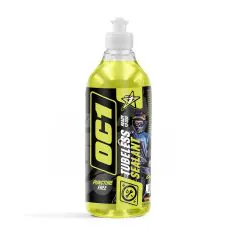
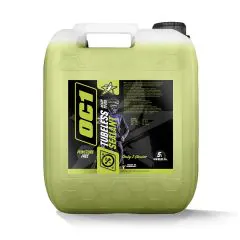
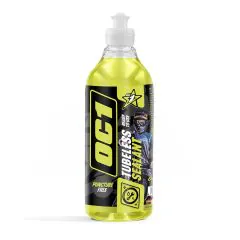
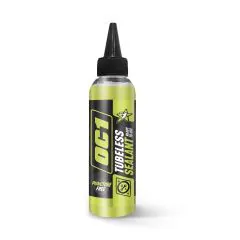
OC1 tubeless tyre sealants in four sizes, from a handy 140 ml bottle to a 5 l workshop canister. Synthetic latex formula, ammonia-free, safe for rims and valves. They seal punctures of a few millimetres and work at any pressure, from road to MTB.
- Lubes & Sealant BundleSpecial Price €41.00 Regular Price €56.00Min. 30 days: €41.00Maximum drivetrain performance
-
-
- OC1 Tubeless Sealant 950ml€35.00€3.68/100 mlA 950 ml bottle — both wheels with a spare for the season.
-
What seals a tubeless tyre?
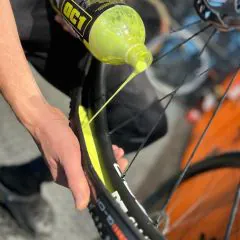
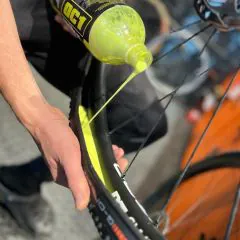
Tubeless sealant is a synthetic latex liquid that circulates inside the tyre. When a puncture happens it escapes with the air, dries in the hole and closes it within seconds — most of the time you will not even notice anything happened.
It works on punctures up to a few millimetres: thorns, small glass, spikes. It will not save a cut sidewall or a hole left by a larger stone — those need a repair plug or an emergency inner tube.
⚠ Tubeless sealant is not the same thing as a product for inner tubes. If you ride on classic tubes, this is not the product for you — it is made for a tubeless setup, meaning a tyre seated directly on an airtight rim.
How much sealant goes into a tyre?
The dose depends on tyre width. Approximate values:
Road and gravel — 60–80 ml per tyre.
MTB (2.1–2.4") — 80–120 ml.
Plus and fat bike tyres — 120–180 ml, sometimes more.
The tyre manufacturer states the exact dose and it is worth sticking to it. Too little liquid means there will not be enough to seal a puncture; too much is simply extra weight spinning on the wheel.
How often should sealant be replaced?
Sealant dries out — that is its natural life cycle, not a defect. In practice a rhythm of every 3–6 months works, more often in summer and at high temperatures.
The simplest test: take the wheel off and shake it next to your ear. If you hear sloshing, the liquid is still working. If it is silent, the tyre has no protection, even though it still holds air.
When replacing, it is worth looking inside and removing dried clumps of latex before the fresh portion goes in.
Which size should you pick?
140 ml — one or two top-ups, the size that fits in a pack.
450 ml — 3–4 MTB tyres, a season for one bike. The most common choice.
950 ml — a whole season across several wheels, or for a family riding together.
5 l — the workshop version, 40–50 tyres and the lowest price per millilitre.
Every size is the same formula: synthetic latex without ammonia, so it attacks neither the rim nor the valve mechanism. It works across the full pressure range — from low MTB pressures to road.
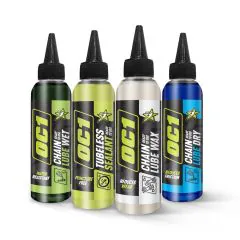
If you are sorting out drivetrain and tyres at once, there is the lubricants and sealant bundle, and there is more on the drivetrain itself in our guide to cleaning and lubricating a bicycle chain.