
Product added to cart
Bicycle Care Products
Bicycle care products: cleaners for frame and drivetrain, chain lubricants for dry, wet and changeable conditions, and tubeless tyre sealants. All safe for carbon, paintwork and disc brakes. Available as single products or ready-made service bundles, and the lubricant comparison is below the product list.
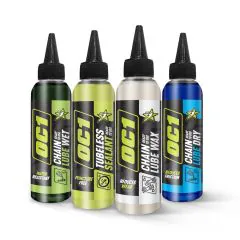
- Lubes & Sealant BundleSpecial Price €41.00 Regular Price €56.00Min. 30 days: €41.00Maximum drivetrain performance
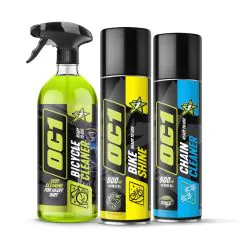
- Maintenance BundleSpecial Price €125.00 Regular Price €170.00Min. 30 days: €125.00Wash, clean, protect
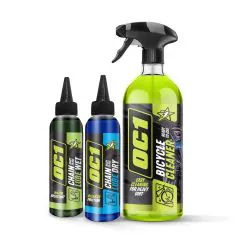
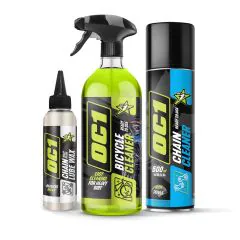
- Cleaner & Lube BundleSpecial Price €30.00 Regular Price €44.75Min. 30 days: €30.00Complete drivetrain care for every weather condition
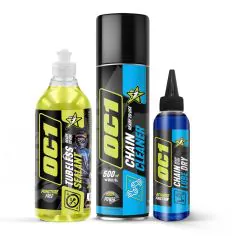
- Drivetrain BundleSpecial Price €33.00 Regular Price €44.00Min. 30 days: €33.00Clean drivetrain, sealed tyres
- Bicycle Must Have BundleSpecial Price €32.00 Regular Price €42.75Min. 30 days: €31.75Clean bicycle, efficient drivetrain
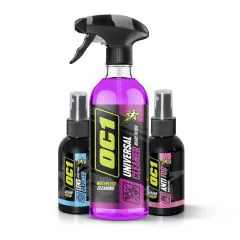
- Helmet & Visor BundleSpecial Price €23.00 Regular Price €32.00Min. 30 days: €23.00Always a clear view
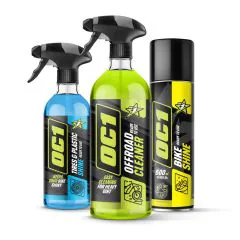
- Offroad Must Have BundleSpecial Price €34.75 Regular Price €46.75Min. 30 days: €34.75Ready for any terrain
-
-
-
-
-
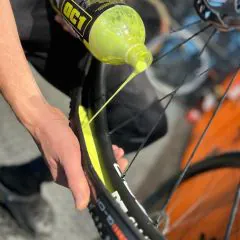
Which chain lubricant should you choose?
This question comes up more than any other, and the answer depends on riding conditions alone — not on price and not on the type of bike. The rule is simple: the more water and mud, the thicker the lubricant.
Dry conditions — road, gravel in summer, sandy trails. Chain Lube Dry soaks into the links and leaves a thin layer that does not attract dust. Its biggest advantage is that the chain stays clean for longer.
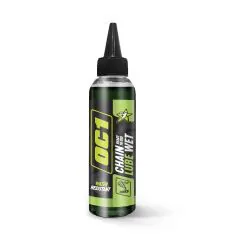
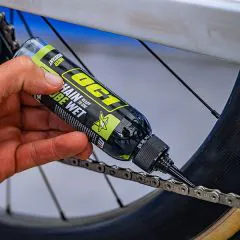
Wet conditions — rain, mud, autumn and winter. Here you need Chain Lube Wet. The thicker, more adhesive formula does not wash off and protects against corrosion, but it collects dirt faster, so the drivetrain needs cleaning more often.
Variable conditions and maximum efficiency — Chain Lube Wax. Wax penetrates the links and sets into a dry coating. It cuts chain wear by over 80% compared with running unlubricated, and it does not mark your calf.
One thing holds whatever you choose: only ever lubricate a clean chain. Fresh lubricant on old dirt forms an abrasive paste that destroys the cassette faster than no lubricant at all. Use Chain Cleaner to degrease the drivetrain first.
Tubeless sealant — how much and how often?
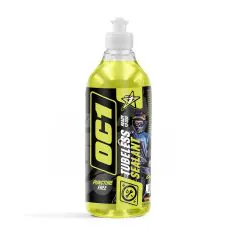
Tubeless sealant is a liquid poured into the tyre that seals a puncture the moment it happens. It handles holes up to a few millimetres; larger cuts need a plug or an emergency inner tube.
How much: roughly 60–80 ml per road or gravel tyre, 80–120 ml for MTB, more for plus and fat bike tyres. The tyre manufacturer states the exact dose.
How often to replace: sealant dries out. In practice a rhythm of every 3–6 months works, more often in hot weather. If you shake the wheel and hear no sloshing, the liquid has dried and the tyre is unprotected.
Which size: 140 ml covers one or two top-ups and fits in a pack. 450 ml is enough for 3–4 MTB tyres — a season for one bike. 950 ml covers a season across several wheels, and 5 l is the workshop size: 40–50 tyres and the lowest price per millilitre.
The OC1 formula contains no ammonia, so it attacks neither rims nor valve cores.
Washing a bike — what should you avoid?
The real risk when washing a bike is not the dirt. It is pressurised water forced into bearings, and cleaning product that reaches the brake rotors.
Pressure washer — never aim the jet at the bottom bracket, hubs or headset. Water punches through the seals and flushes out the grease.
Disc brakes — any oily product on a rotor or pad means squealing and lost braking power. Rotors are cleaned with a dedicated brake degreaser only, never with a universal cleaner or a lubricant.
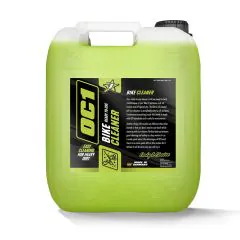
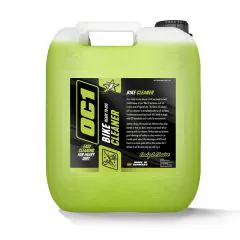
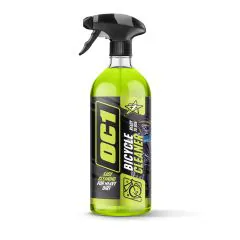
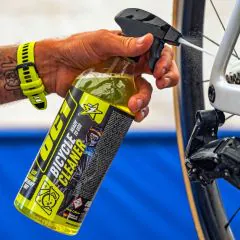
Frame and carbon — Bicycle Cleaner is safe for paintwork, carbon, aluminium, rubber and plastic. Spray it onto a dry frame, leave it two or three minutes and rinse. No scrubbing needed.
After every wash — the chain needs lubricating again. Water flushes lubricant out of the links more effectively than anything else.
Where should you start?
If you are building up your bike care from scratch, a bundle is simpler than picking products one by one. The MUST HAVE bundle for cyclists covers washing, drivetrain cleaning and wax lubrication. The lubricants and sealant bundle holds three lubricants for different conditions plus tubeless sealant — the option for riding all year round.
There is more on the drivetrain itself in our guide to cleaning and lubricating a bicycle chain.