Product added to cart
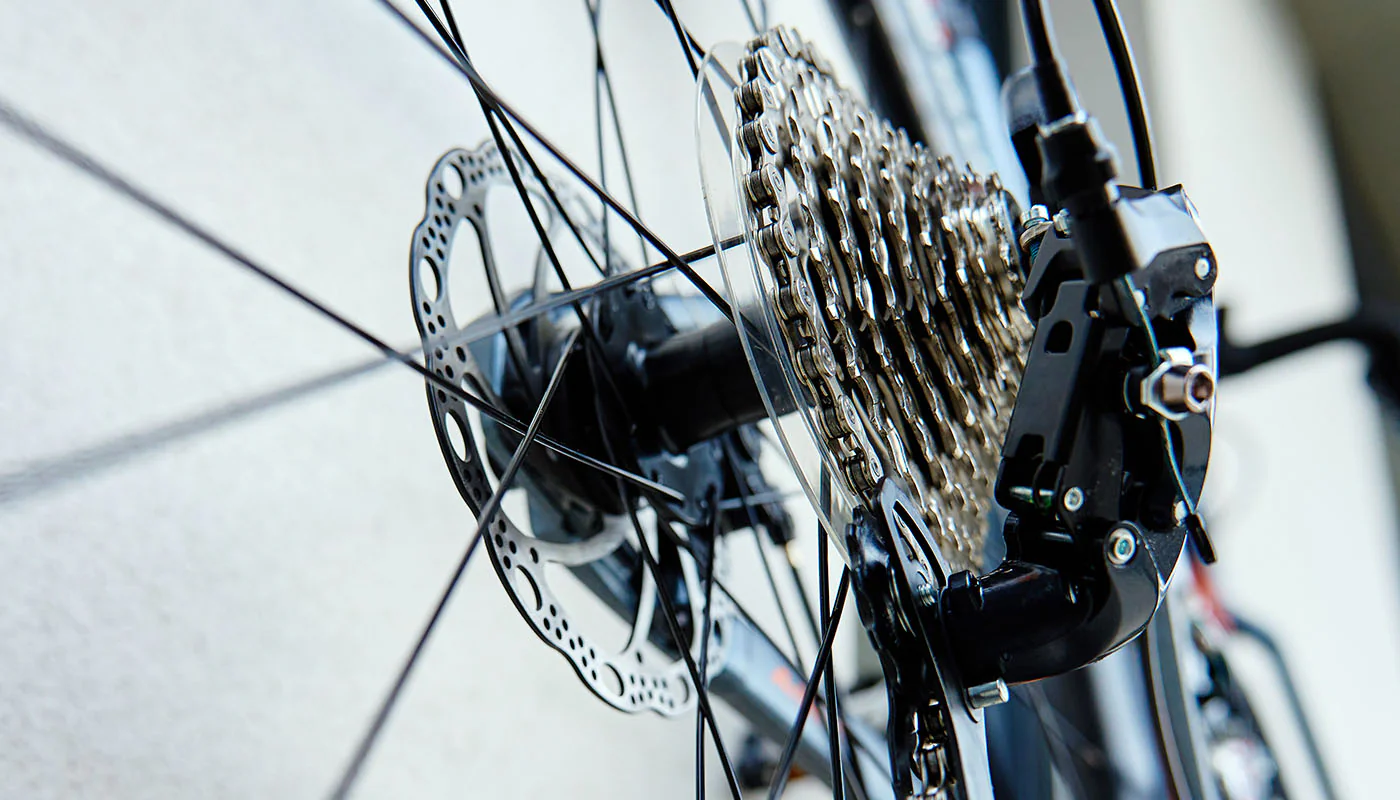
Choosing the right brake rotors for a mountain bike is a decision that affects not only safety but also riding comfort and running costs. Solid and floating brake rotors differ in construction, behaviour, and characteristics — each type has its strengths and limitations. Understanding these differences enables an informed choice, matched to your riding style and the conditions you most frequently pedal in.
How do solid and floating brake rotors differ?
The fundamental difference between these two rotor types lies in how they're mounted to the wheel hub. Solid brake rotors are permanently attached to the hub — the rotor and hub form a single, inseparable unit. They rotate together, without any play or possibility of mutual movement.
Floating brake rotors have a more complex construction. Their central part — the mounting ring — is rigidly connected to the hub, whilst the outer part of the rotor, the working surface, has slight freedom of movement. Special rivets or bolts connect both parts but allow minimal rotor displacement perpendicular to the axis of rotation. This apparent "play" is a deliberate design element and brings a range of benefits.
Solid brake rotors — simplicity and reliability
Solid brake rotors are a solution valued for directness and certainty of operation. The absence of moving parts means simpler construction, fewer components that can wear, and lower failure risk. Rotors of this type perform well in conditions where braking precision and immediate response to lever squeeze matter.
Advantages of solid rotors
The main advantage of solid rotors is direct braking force transfer. When pads press against the rotor, energy is transmitted directly, without any losses or delays. This gives a sense of full control and predictability — particularly important in technical trail sections where precise braking modulation is crucial.
Construction simplicity also means lower risk of technical problems. The absence of additional bearings, rivets, or other moving parts makes solid rotors less susceptible to mechanical damage. This is good news for cyclists who value reliability and don't want to worry about complicated repairs.
Another benefit is usually lower price. Solid rotors are cheaper both to purchase and maintain. They don't require specialist hubs or additional components, reducing total equipment cost.
Disadvantages of solid rotors
However, the rigid connection to the hub also has its downsides. The first is poorer vibration damping. Vibrations arising during braking are transferred directly to the entire structure — hub, spokes, rim, tyre — which can cause unpleasant sensations in the hands and noise. During prolonged, intensive descents, this can be tiring.
Solid rotors also have limited heat dissipation capacity. During braking, the rotor heats up and metal expands thermally. In a solid rotor without freedom of movement, expansion can lead to internal stresses and deformation. In extreme cases — for example during very long, steep descents — the rotor can overheat, reducing braking effectiveness and increasing the risk of permanent damage.
Additionally, solid rotors are more sensitive to impacts and shocks. A strong impact, for example against a rock or root, can cause permanent rotor bending, and repairing such damage is often impossible — the entire rotor must be replaced.
Floating brake rotors — comfort and performance
Floating brake rotors are a more technically advanced solution offering better adaptation to conditions and smoother brake operation. The additional freedom of movement of the outer rotor part allows better adjustment to minor mounting inaccuracies, temperature changes, and dynamic loads during riding.
Advantages of floating rotors
The most important advantage of floating rotors is their ability to dampen vibrations. The minimal freedom of movement of the outer rotor part acts as a shock absorber, absorbing vibrations before they reach the hub and bike frame. The result? Quieter brake operation, less vibration in the hands, and overall smoother, more comfortable braking.
Floating rotors dissipate heat better. During intensive braking, the rotor can freely expand thermally without creating internal stresses. This extends rotor lifespan, reduces deformation risk, and ensures more stable, predictable braking power even during prolonged descents.
Another benefit is the ability to self-centre. The slight freedom of movement allows the rotor to automatically adjust to brake pad position, reducing the risk of residual friction and improving overall braking system efficiency.
Floating rotors are also more resistant to impact consequences. When the wheel strikes an obstacle, the rotor's freedom of movement helps absorb some of the energy, reducing the risk of permanent bending or cracking.
Disadvantages of floating rotors
The main disadvantage of floating rotors is higher price. More complicated construction, additional components, special bearings or rivets — all of this costs money. Both purchase and any repairs are more expensive than for solid rotors.
Construction complexity also means more components that can wear. Bearings, rivets, and connections require regular inspection. Although modern floating rotors are very durable, over time they may require replacement of certain components, involving additional costs and the need for a service visit.
Some cyclists also notice slightly less direct braking compared to solid rotors. The minimal freedom of movement, though beneficial in many respects, can introduce subtle delay in force transfer — the difference is usually small but may be noticeable for demanding cyclists.
What to consider when choosing
The decision between solid and floating brake rotors depends on several key factors. The first is budget. If you're looking for proven, reliable brakes at a reasonable price, solid rotors will be a good choice. If you prioritise maximum comfort and performance and are willing to invest more, floating rotors offer clear benefits.
Riding style is hugely important. Do you mainly ride on flat terrain, on roads, or gravel tracks? Solid rotors will easily suffice. But if your element is long, steep descents, technical singletracks in mountains, or aggressive riding in challenging terrain — floating rotors will provide better control, comfort, and durability.
Bike type also matters. XC and marathon bikes, where low weight and direct braking matter, often use solid rotors. Enduro, downhill, and trail bikes, where reliability in extreme conditions is the priority, are more frequently equipped with floating rotors.
Finally, willingness and ability to perform regular maintenance. Solid rotors require less attention — basic cleaning and wear inspection suffice. Floating rotors may need more detailed inspections, though with good quality products, the differences aren't dramatic.
Performance in practice
In practice, performance differences between solid and floating rotors are noticeable, though not always dramatic. Solid rotors offer very direct, immediate response — when you squeeze the levers, you feel full braking power without any delay. This is excellent for cyclists who value precision and predictability.
Floating rotors give smoother, more balanced braking. Vibration reduction and better heat dissipation translate to greater comfort, particularly during long, demanding descents. Brakes work quieter, more stably, and more predictably even in extreme conditions.
However, it's worth remembering that the rotor itself is just one element of the braking system. Final performance also depends on brake pad quality, condition of hydraulic lines or cables, calliper type, and correct setup of the entire system. The best rotors won't work miracles if the rest of the system is neglected.
Brake maintenance — the key to long life
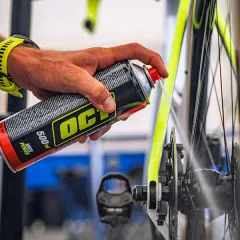
Regardless of rotor type, regular maintenance is an absolute essential. Clean brakes work more effectively, quieter, and longer. After every ride in mud, rain, or dusty conditions, it's worth spending a moment on quick cleaning of rotors and pads.
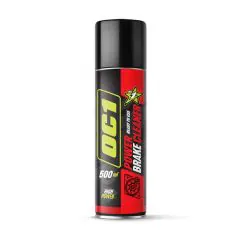
For rotor degreasing, a specialist product like OC1 Power Brake Cleaner works ideally, instantly removing deposits, oil, and contaminants without leaving any traces. For less intensive applications, OC1 Brake Cleaner in the standard version works equally well. Both products quickly restore full braking power and eliminate unpleasant pad squeal.
Regular pad wear inspection is another important element. Brake pads are a consumable part — they wear and require replacement. Riding on worn pads means not only weaker braking but also risk of rotor damage. Check friction material thickness every few weeks, and you certainly won't miss the replacement moment.
Ensure callipers are properly positioned and centred. The rotor should pass through the callipers without rubbing against pads in neutral position. If you hear constant scraping, it may mean callipers need adjustment or the rotor is bent.
Check the condition of bolts securing the rotor to the hub. They should be tightened to the correct torque — too loose can lead to improper brake operation, too tight can damage the rotor. Use appropriate tools and follow manufacturer recommendations.
Avoid excessive braking at very high speeds. Long, intensive braking generates enormous amounts of heat that can overheat rotors, pads, and brake fluid. Try to brake in series — brake, allow brakes to cool, brake again. This is particularly important during long descents.
Durability and lifespan
Brake rotor durability depends on many factors: material quality, usage intensity, riding conditions, and maintenance level. Solid rotors typically have long lifespans thanks to their simple, resistant construction. With appropriate care, they can serve for years without problems.
Floating rotors, despite more complex construction, also offer very good durability — provided they come from reputable manufacturers. The key is regular inspection of moving components such as rivets or bearings, and attention to cleanliness. If you notice signs of excessive play, grinding, or uneven wear, it's worth consulting a mechanic.
In both cases, the rotor working surfaces and pads are most susceptible to wear. Regularly check whether the rotor has deep scratches, cracks, unevenness, or deformation. If the rotor is visibly bent, has cracks, or its thickness has fallen below the minimum value specified by the manufacturer — it's time for replacement.
Popular brands and quality standards
Many reputable brake rotor manufacturers for mountain bikes are available on the market. Shimano, SRAM, Hope, Magura, Avid, Galfer — these are just a few of the leading brands offering products proven in extreme conditions. Each has both solid and floating rotors in various sizes and configurations in their range.
When choosing rotors, it's worth being guided not only by price but above all by quality and other users' opinions. Proven brands invest in research, test their products in extreme conditions, and use advanced materials. This translates to better performance, greater durability, and ultimately — greater safety.
Don't forget about compatibility either. Not all rotors fit all hubs and callipers. Check the mounting type (Centre Lock or 6-bolt), rotor diameter, and compatibility with your calliper model before purchasing.
Summary
The choice between solid and floating brake rotors is a decision dependent on individual needs, riding style, and budget. Solid rotors offer simplicity, reliability, lower costs, and direct braking — an excellent choice for cyclists riding in less demanding conditions or prioritising predictability and ease of maintenance.
Floating rotors bring greater comfort, better vibration damping, more effective heat dissipation, and greater resistance to deformation — the natural choice for those riding aggressively, in challenging terrain, on long descents, or on technical, demanding trails.
Regardless of choice, the key to fully exploiting brake potential is regular maintenance. Clean, well-maintained rotors and pads, properly positioned callipers, and systematic technical condition checks are the recipe for safe, confident, and enjoyable riding for many years.
Previous Chain Lubrication in Motocross – Why It's Essential ? Next A clean chain - savings and riding confidence
Related Products
-
-
-
 QuickviewOut of stock
 -