Product added to cart
How to choose the right motorcycle helmet?
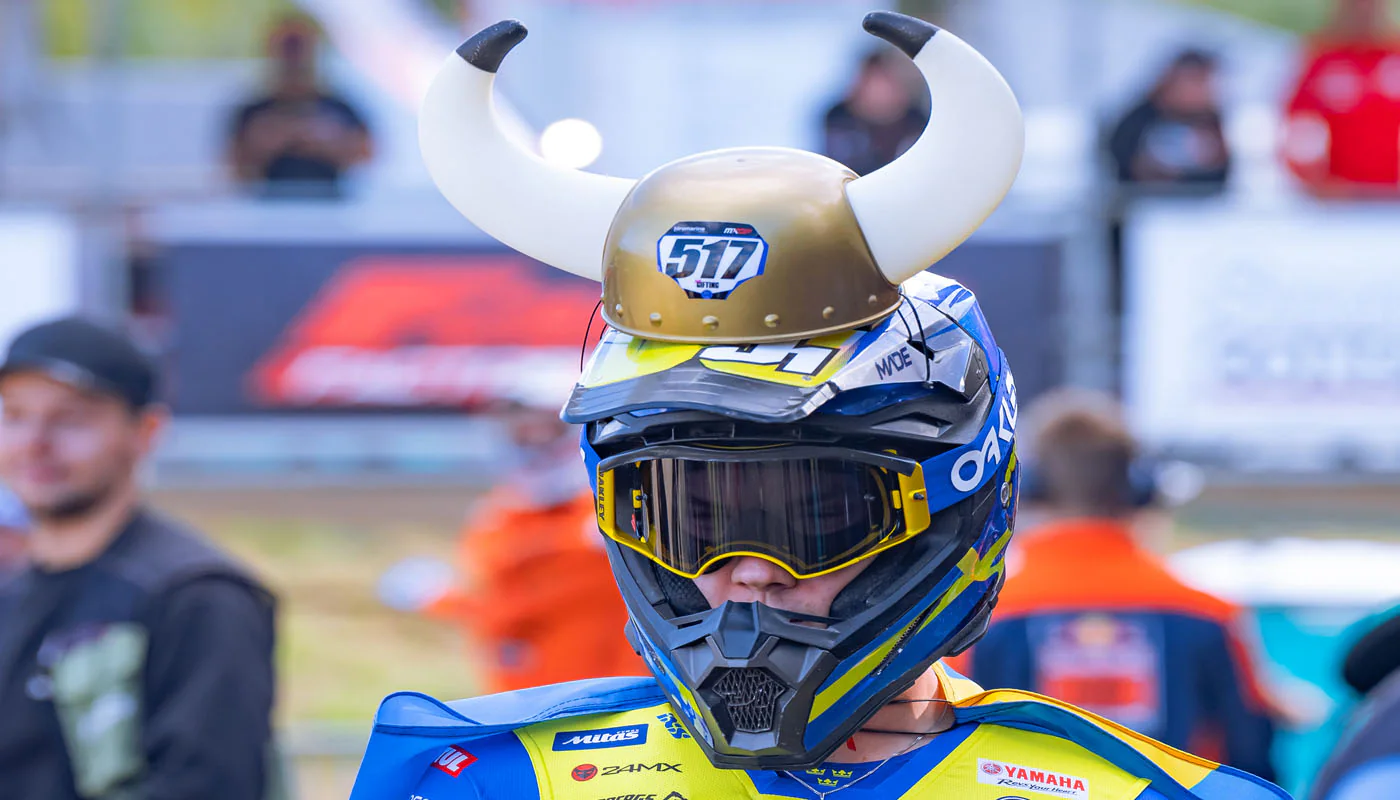
A motorcycle helmet isn't merely compulsory equipment — it's every motorcyclist's most important safety element. In an accident, it's the helmet that can save a life or prevent serious head and brain injuries. Statistics leave no doubt — motorcyclists wearing helmets have significantly greater chances of survival and avoiding permanent injury. Choosing the right helmet is a decision requiring knowledge and consideration. Different helmet types offer different levels of protection, comfort, and functionality. Understanding these differences enables an informed choice that ensures maximum safety and comfort during every ride.
Why is a motorcycle helmet so important?
A helmet protects the most critical part of the body — the head and brain. Even a seemingly minor fall or impact can result in serious injury if the head isn't properly protected. Modern helmets are designed incorporating advanced research into injury biomechanics and utilise materials capable of absorbing enormous amounts of energy during impact.
A helmet's main functions are protection against skull and brain injuries, minimising facial injury risk, and reducing impact effects. A hard outer shell dispersing impact force across a larger area, an inner foam layer absorbing energy, and a fastening system keeping the helmet stable on the head — all these elements work together, creating a comprehensive protective system.
Research shows that wearing a helmet reduces the risk of fatal head injuries by approximately 40% and the risk of serious brain injury by approximately 70%. These figures speak for themselves. Every motorcyclist — regardless of experience, motorcycle type, or distance covered — should treat a helmet as an absolute priority.
Full-face helmets — maximum protection
Full-face helmets are the most popular and safest motorcycle helmets. They're characterised by an enclosed construction covering the entire head, face, and chin. It's precisely this complete coverage that provides the highest level of protection available to motorcyclists.
Advantages of full-face helmets
Comprehensive protection is the most important advantage. A full-face helmet protects not only the skull but also the face and chin — areas particularly vulnerable to injury in accidents. Accident research indicates that a significant proportion of impacts occur on the lower face — an open helmet doesn't protect these areas, whilst a full-face provides complete coverage.
Aerodynamics is another benefit. The streamlined, enclosed shape reduces air resistance and turbulence, translating to less neck fatigue during long routes and lower noise levels. At motorway speeds, the difference is clearly noticeable.
Many modern full-face helmets are equipped with additional features — built-in tinted sun visors, Bluetooth communication systems, advanced ventilation systems. These are solutions that enhance user comfort without compromising safety.
Who are full-face helmets for?
Full-face helmets are the natural choice for road, sports, and touring motorcyclists, and all who prioritise safety. They work well both for daily commutes to work and during long motorcycle expeditions or aggressive sports riding.
Modular helmets — versatility and convenience
Modular helmets combine features of full-face and open helmets. Their characteristic feature is a hinged chin section that can be raised to reveal the face without removing the entire helmet. This solution offers flexibility without significant safety compromises.
When is a modular helmet a good choice?
Modular helmets work ideally during urban riding — stopping at traffic lights, a quick conversation, drinking water, or chewing an energy bar — all possible without removing the helmet. For motorcyclists wearing prescription glasses, raising the chin bar makes putting on and removing glasses easier.
Touring motorcyclists particularly appreciate modular helmets during long expeditions. The ability to quickly ventilate the face when stationary, more convenient eating or drinking during breaks — this is comfort that matters during multi-hour routes.
Modular helmet safety
Modern modular helmets offer protection levels comparable to full-face helmets, provided they're properly fastened and closed whilst riding. The key element is a solid chin bar locking mechanism — the best models have safety certifications in both closed and open configurations. When choosing a modular helmet, it's worth noting reputable manufacturers who invest in advanced testing and certification.
Open-face helmets — classic style and freedom
Open-face helmets are a construction protecting the head and upper face, leaving the chin and jaw exposed. This style is particularly popular among urban motorcyclists, classic motorcycle enthusiasts, and those riding in warm climates.
Advantages of open-face helmets
Freedom and ventilation are the main benefits. The open construction ensures excellent air circulation, invaluable when riding on hot days or in congested urban traffic. A wider field of vision and easier contact with surroundings make riding feel more direct and natural.
Open-face helmets are also lighter and more compact than full-face, making storage easier. Aesthetics and style often attract enthusiasts of classic chopper or cruiser motorcycles, for whom an open-face helmet ideally complements the machine's character.
Limitations of open-face helmets
However, it must be remembered that open-face helmets offer considerably less face and chin protection. In a frontal or side impact, these areas remain completely unprotected, which can result in serious injuries. The open construction also means greater exposure to wind, noise, insects, and small stones, which becomes troublesome at higher speeds.
Open-face helmets work best in the city, at lower speeds, and in situations where accident risk is relatively lower. They're not recommended, however, for sports riding, long-distance touring, or in challenging road conditions.
Off-road helmets — specialisation for off-road
Off-road helmets (motocross, enduro) are a specialised construction designed for terrain riding. Characteristic features include an extended chin bar, prominent peak, and construction designed for use with goggles instead of a visor.
Why are off-road helmets different?
Terrain riding places different demands than road riding. The extended chin bar provides better ventilation and facilitates breathing during intense physical exertion. The peak protects against sun, mud, stones, and branches — elements that off-road motorcyclists encounter daily.
Off-road helmets are usually lighter than full-face, reducing neck strain during long riding sessions requiring dynamic head movements. Larger ventilation openings ensure intensive air circulation, essential during physically demanding terrain riding.
Limitations of off-road helmets
Construction optimised for terrain riding has its drawbacks on the road. The lack of a visor and necessity of using goggles limits convenience during road riding. At higher speeds, the peak generates turbulence and can lift the head, causing neck fatigue. Off-road helmets are also noisier on the road than full-face or modular ones.
Dual-sport helmets — versatility
Dual-sport (adventure) helmets are a compromise combining features of full-face and off-road helmets. They have an enclosed construction with a visor, but also a distinct peak and aerodynamics inspired by off-road designs.
Who are dual-sport helmets for?
This is the ideal choice for adventure motorcyclists who ride both on tarmac and off-road. A removable peak and the ability to use either visor or goggles provide flexibility to adapt the helmet to current conditions.
Touring motorcyclists covering diverse routes — from motorways to forest gravel tracks — appreciate dual-sport versatility. This solution offers good safety, decent ventilation, and comfort both on and off the road.
What to consider when choosing a helmet
Choosing a helmet is a decision requiring consideration of several key factors. The most important are size and fit, safety certifications, weight, ventilation system, and visor quality.
Size and fit
A helmet must fit the head shape perfectly. A helmet that's too loose moves during riding and doesn't provide appropriate protection. One that's too tight causes pain, pressure, and discomfort. Trying helmets in the shop is an absolute necessity — spend several minutes with the helmet on, checking it doesn't press anywhere and doesn't move during head movements.
It's worth remembering that the inner foam slightly adapts to head shape during use. A new helmet should be slightly tight but not painful when wearing. After several weeks of use, it will perfectly adapt to individual anatomy.
Safety certifications
Certifications are a guarantee that the helmet has passed rigorous crash testing. In Europe, the standard is ECE 22.06 certification (the latest version of the standard), in the USA DOT, and the most demanding is SNELL certification. Never buy a helmet without appropriate certifications — it's a saving that could cost health or life.
Helmet weight
A lighter helmet means less neck fatigue during long routes. Modern composite materials (carbon fibre, Kevlar) enable construction of very light helmets with high durability. A helmet weighing 1.3–1.5 kg is standard for good full-face helmets.
Ventilation and comfort
A good ventilation system is a key comfort element, particularly when riding on warm days. Ventilation openings at the front of the helmet draw in fresh air, which circulates inside and exits through rear vents. The ability to regulate airflow allows adapting ventilation to conditions and preferences.
Helmet care — extending lifespan
A helmet requires regular care to maintain its protective properties and aesthetic appearance. The main areas requiring attention are the visor, outer shell, and helmet interior.
Visor cleaning
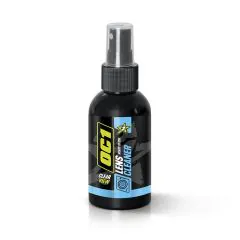
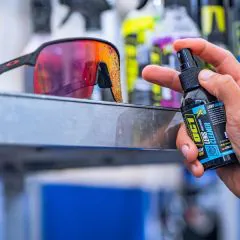
The visor is the element most exposed to contamination — insects, mud, dust, rain streaks. A clean visor isn't just about aesthetics but, above all, safety — good visibility saves lives. For visor cleaning, OC1 Lens Cleaner works ideally — the alcohol-free formula effectively removes greasy marks, fingerprints, and contamination without risk of scratching the delicate surface. The product leaves an electrostatic film on the visor limiting dust re-settling, keeping the visor clean for longer.
The fogged visor problem
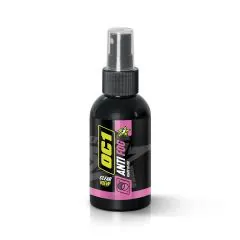
A fogged visor is a serious safety problem — it limits visibility and forces opening the visor whilst riding. The solution is regular use of an anti-fog product. OC1 Anti Fog creates an invisible coating on the visor surface preventing water vapour condensation. One application is sufficient for many hours of riding, ensuring crystal-clear visibility regardless of conditions.
Shell cleaning
The helmet's outer shell collects dust, mud, insect traces, and road grime. Regular cleaning maintains the helmet in good condition and allows early detection of any damage. OC1 Universal Cleaner is a product that works without water — simply spray, wipe with a cloth, and done. The formula masks minor scratches, enhances colour depth, and leaves a pleasant scent.
Interior freshness
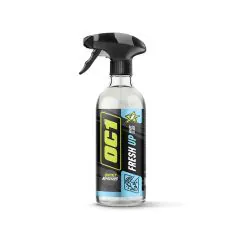
The helmet interior absorbs sweat and after a while begins to smell unpleasant. OC1 Fresh Up with silver nanoparticles effectively eliminates unpleasant odours and reduces bacteria and fungi's ability to reproduce. Safe for fabrics and skin, it leaves no stains. Regular use keeps the helmet interior fresh and hygienic.
How long does a motorcycle helmet last?
Manufacturers recommend replacing a helmet every 5–7 years, even if it shows no visible damage. Materials — particularly impact-absorbing foam — lose their properties over time due to UV radiation, sweat, temperature changes, and natural ageing. A helmet that has survived a drop or strong impact should be replaced immediately — even if no external damage is visible, the internal structure may have been compromised, drastically reducing protection level.
Signs that it's time for helmet replacement include shell cracks, loose or damaged strap attachments, deteriorated inner foam, visor or fastener problems. If a helmet has "survived" more than 7 years — it's definitely time for a new one, regardless of visual condition.
Summary
Choosing the right motorcycle helmet is one of the most important decisions a motorcyclist makes. Full-face helmets offer the highest protection level and are the safest choice for most motorcyclists. Modular helmets provide greater convenience without significant safety compromises. Open-face helmets work well in the city but offer limited protection. Off-road and dual-sport helmets are specialised solutions for those riding beyond tarmac.
The key is matching the helmet to individual needs, riding style, and budget. Investing in a high-quality helmet is an investment in safety. Equally important is regular care — a clean visor, fresh interior, and well-maintained shell aren't just about aesthetics but also a guarantee that the helmet will fulfil its role at the critical moment.
Remember: the best helmet is the one you wear on every ride. There are no excuses — your safety is paramount.