Product added to cart
Hard Enduro vs SuperEnduro - differences and maintenance
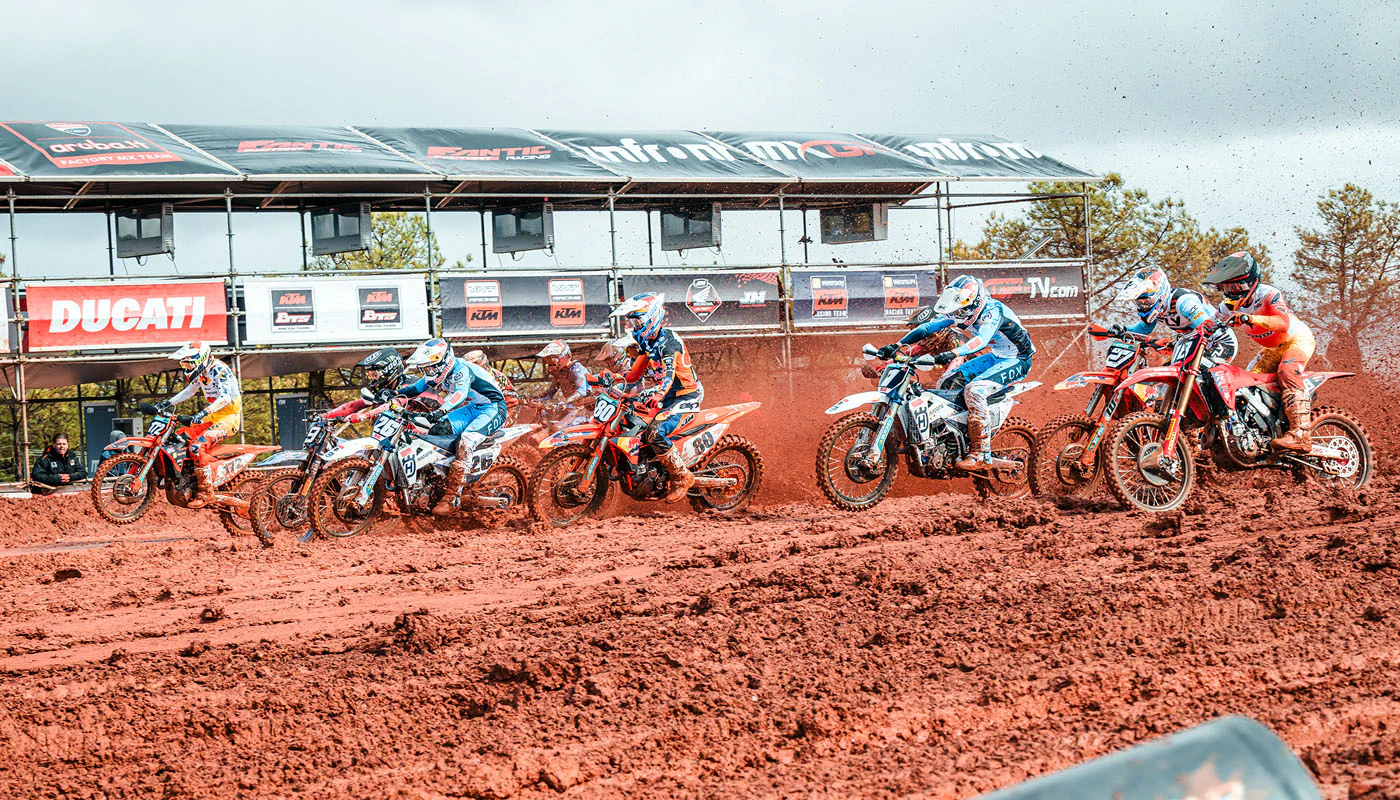
Enduro attracts two-wheel enthusiasts with its diversity and challenges. Hard Enduro and SuperEnduro are the two most spectacular variants of this discipline, which despite sharing common roots, differ in practically everything — from course character, through equipment requirements, to motorcycle maintenance specifics. Understanding these differences will help not only in choosing the right discipline, but also in proper machine preparation and care.
Hard Enduro — an extreme test of capabilities
Hard Enduro is a discipline that defines the limits of human capability and equipment endurance. Let's examine what distinguishes this most extreme form of off-road motorcycle competition.
The most demanding form of off-road motorcycle competition
Hard Enduro is the essence of extreme motorcycle riding. Competitions take place in natural, often wild terrain, where competitors face obstacles that nature throws beneath their wheels. Steep, rocky climbs exceeding 45 degrees, deep fords, enormous boulders requiring precise balancing, plus roots, mud and loose stones — this is everyday life in Hard Enduro.
The legendary Red Bull Romaniacs, Erzbergrodeo and The Tough One are events that define this discipline. Courses often measure 30–50 kilometres, but completing them takes competitors many hours. The key to success is not speed, but technique, perseverance and the ability to read the terrain. A competitor must be able to balance the motorcycle on a cliff edge, climb a slippery rock and ride over a log without losing balance.
Motorcycles adapted for extreme conditions
Machines used in Hard Enduro are specially prepared constructions with 250–450 cc engines. They feature reinforced long-travel suspension (approximately 300 mm) that must absorb impacts against sharp rocks and ground. Motorcycle weight is typically 100–110 kg — every kilogram matters when lifting the machine on a steep climb.
Important elements also include:
-
A heavy-duty steel skid plate protecting against mechanical damage
-
Specialist tyres with soft compound and aggressive tread
-
Reinforced brake and clutch levers
-
Additional frame and case protection
-
A gentler engine map allowing precise power control
Maintenance after Hard Enduro — battling mud and rocks
Hard Enduro places extreme maintenance demands on motorcycle owners. After every ride, the machine is covered in a layer of mud mixed with stones, dust and water. Neglecting cleaning leads to rapid component wear, corrosion and failure.
Key maintenance tasks include thorough removal of mud and stones from the entire motorcycle, particularly around the chain, sprocket, drive system and radiator. Cleaning products must be effective yet safe for seals and rubber components. This is followed by degreasing and drying the drivetrain, then re-lubricating it. Regular inspection of guards, levers and suspension components helps avoid costly repairs.
After extreme off-road riding, checking air filter condition is particularly important, as it may be completely clogged with mud and dust. The filter should be cleaned or replaced, and the filter housing thoroughly cleaned to protect the engine from premature wear.
SuperEnduro — dynamic competition under cover
SuperEnduro is an entirely different discipline that brings enduro excitement into the controlled environment of a sports arena. Let's explore the specifics of this dynamic form of competition.
Spectacle on enclosed circuits
SuperEnduro brings enduro into sports halls and enclosed arenas. Competitions take place on specially prepared tracks with diverse obstacles: rock sections, descents, climbs, bridges and mud patches. The track measures 400–800 metres, and competition takes a race format — a dozen or so riders simultaneously battle for first place.
The crucial difference is pace. A race lasts 6–8 minutes, and competitors reach significantly higher speeds than in Hard Enduro. Reflexes, dynamism and aggressive riding count. The three most important qualities are: agility when negotiating technical sections, acceleration on straights and courage on jumps.
Lighter and more dynamic constructions
SuperEnduro motorcycles differ from their Hard Enduro counterparts primarily in weight and geometry. These are typically machines with 250–350 cc engines, lighter (approximately 95–105 kg) and more agile. Suspension is somewhat shorter and more sportily tuned — it doesn't need to absorb extreme impacts, but must provide precise control on fast sections.
Characteristic features include:
-
Shorter gearing for better acceleration
-
A more aggressive engine map
-
Sports tyres with harder compound
-
Lighter wheels for faster acceleration
-
Fewer additional guards — weight is the priority, not protection
Maintenance after SuperEnduro — battling dust and intensity
Although SuperEnduro takes place in controlled conditions, the motorcycle operates at very high revs for a short period. Drivetrain, brakes and suspension are subjected to extremely intensive work. Dust from the arena, gravel sections and mud patches also leave their marks on the machine.
The key is regular cleaning and drivetrain maintenance, which in SuperEnduro works far more intensively than in Hard Enduro. Chain, sprockets and transmission require frequent lubrication and replacement. Brake inspection is equally important — intensive braking over short distances causes faster pad and disc wear.
The air filter should also be regularly checked and cleaned, and engine oil changed according to recommended intervals. Many SuperEnduro teams change oil after every competition due to the extreme engine loading.
Key differences between Hard Enduro and SuperEnduro
Both disciplines carry the word "Enduro" in their names, but beyond that they share little. Let's examine the most important differences that define the character of each form of competition.
Terrain versus circuit
Hard Enduro is a genuine off-road adventure in wild countryside, where every course is different and weather conditions affect difficulty level. Competitors must be prepared for everything — from scorching days in the mountains to rain transforming courses into rivers of mud.
SuperEnduro takes place in the controlled conditions of a sports hall. The track is known in advance and conditions are repeatable. This reduces the element of unpredictability but increases competitiveness — everyone competes in identical conditions.
Technique versus speed
In Hard Enduro, technique and the ability to negotiate extreme obstacles matter above all. A competitor may spend several minutes on a single rock, trying to find the best line. Speed is secondary.
In SuperEnduro there is no time for deliberation. Competitors must make decisions in fractions of a second, aggressively attack obstacles and battle rivals elbow to elbow. The faster and more decisive rider wins.
Endurance versus intensity
Hard Enduro competitions last hours and require phenomenal physical and mental conditioning. Competitors must be capable of lifting their motorcycles dozens of times and riding under extreme tension for many hours.
SuperEnduro is a short but maximally intense effort. Competitors work at their limits for 6–8 minutes, demanding explosive power and concentration.
Bicycle enduro — not just motorcycles
The term "Enduro" has also found its place in the world of mountain bikes. Bicycle Enduro comprises competitions consisting of several timed sections (descents) connected by transfer sections (climbs). Only descent times count, but the entire course must be completed within a specified time limit.
Enduro bikes are versatile machines with 150–180 mm suspension, adapted for aggressive riding both uphill and downhill. As in motorcycle Enduro, technique is crucial, but there is no direct equivalent for Hard Enduro or SuperEnduro in the bicycle world — these are specific terms for motorcycle competition.
Summary
Hard Enduro and SuperEnduro are two extremely different variants of off-road motorcycle competition. The first is an extreme technical challenge in natural terrain, requiring endurance and composure. The second is dynamic, intense combat on enclosed circuits, where speed and reflexes count. Both disciplines, however, place similar demands on motorcycle owners — the necessity of regular, thorough maintenance that extends equipment life and guarantees safety whilst riding. Regardless of discipline choice, proper motorcycle care is the foundation of every successful enduro adventure.