Product added to cart
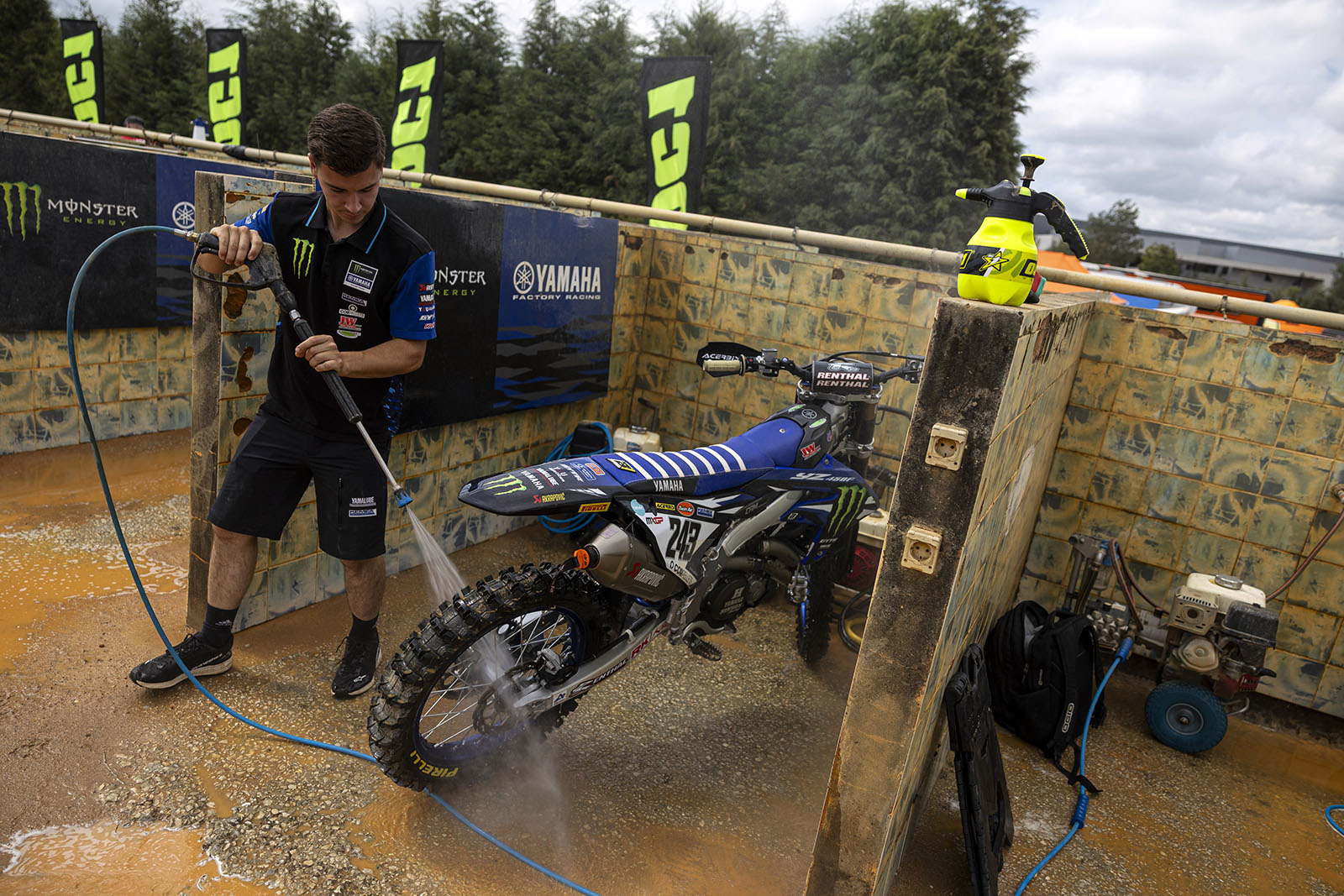
A thorough wash is only the first step in motorcycle care. Clean paint, plastics and fairings are left unprotected, and on the very next ride they collect dust, fine mud, insects and road grime again. Protecting the surfaces after washing keeps the motorcycle looking good for longer, slows down how quickly it gets dirty and makes every following wash quicker.
This guide explains why protecting paint and plastics matters so much, when to apply a protective product, how the whole process works step by step and which mistakes to avoid.
On every ride a motorcycle is exposed to UV radiation, rain, dust, insects and dirt from the road surface. A freshly washed but unprotected surface picks up this contamination faster, and dried water drops leave marks on it. A protective layer acts as a barrier between the paint or plastic and the environment.
Regular surface protection helps to:
This is particularly important for motorcycles used every day, on tours or in changeable weather, where washing is frequent and time for it is usually short.
Polish & protect products work on most smooth exterior surfaces. The table below shows where protection brings the most benefit.
| Part | What it gains from protection |
|---|---|
| Fairings | Fewer insects sticking, dirt comes off more easily |
| Windscreen | Water drops run off more easily, insects stick less |
| Tank and painted parts | Gloss, fewer water marks after rain |
| Plastics and mudguards | Less mud and dust building up |
| Metal parts | Gloss and a water-repellent layer |
The same care routine can be used not only on motorcycles but also on scooters and bicycles. The product is also safe for matt paint and polycarbonate windscreens. On protective and decorative wraps, it is worth testing it first on a small, inconspicuous area. If the plastics are already faded and grey, start by restoring them - the guide how to refresh grey rubber and plastics on a motorcycle explains how.
The best moment is right after the motorcycle has been thoroughly washed and dried. The surface is then free of dirt that could be sealed under the protective layer or scratch the paint during polishing.
Conditions matter too. The product is best applied in the shade, on a cool surface - not straight after a ride, when the engine, exhaust or tank are still hot, and not in full sun. On a hot surface the product dries too quickly, which makes it hard to spread evenly and can leave streaks.
The whole process has three stages and needs no specialist equipment. All it takes is a protective product and two clean microfibre cloths - one for applying and one for polishing.
Before the product is applied, all surfaces must be clean and dry. For road motorcycles OC1 Motorcycle Cleaner does the job, and for heavily muddy off-road bikes - OC1 Offroad Cleaner. How to prepare a motorcycle after riding off-road is covered in the guide how to clean a motorcycle after riding in mud. After rinsing, dry the motorcycle with a soft microfibre cloth or compressed air, paying attention to recesses from which water can keep dripping for several minutes.
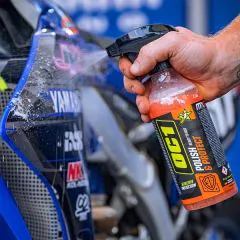
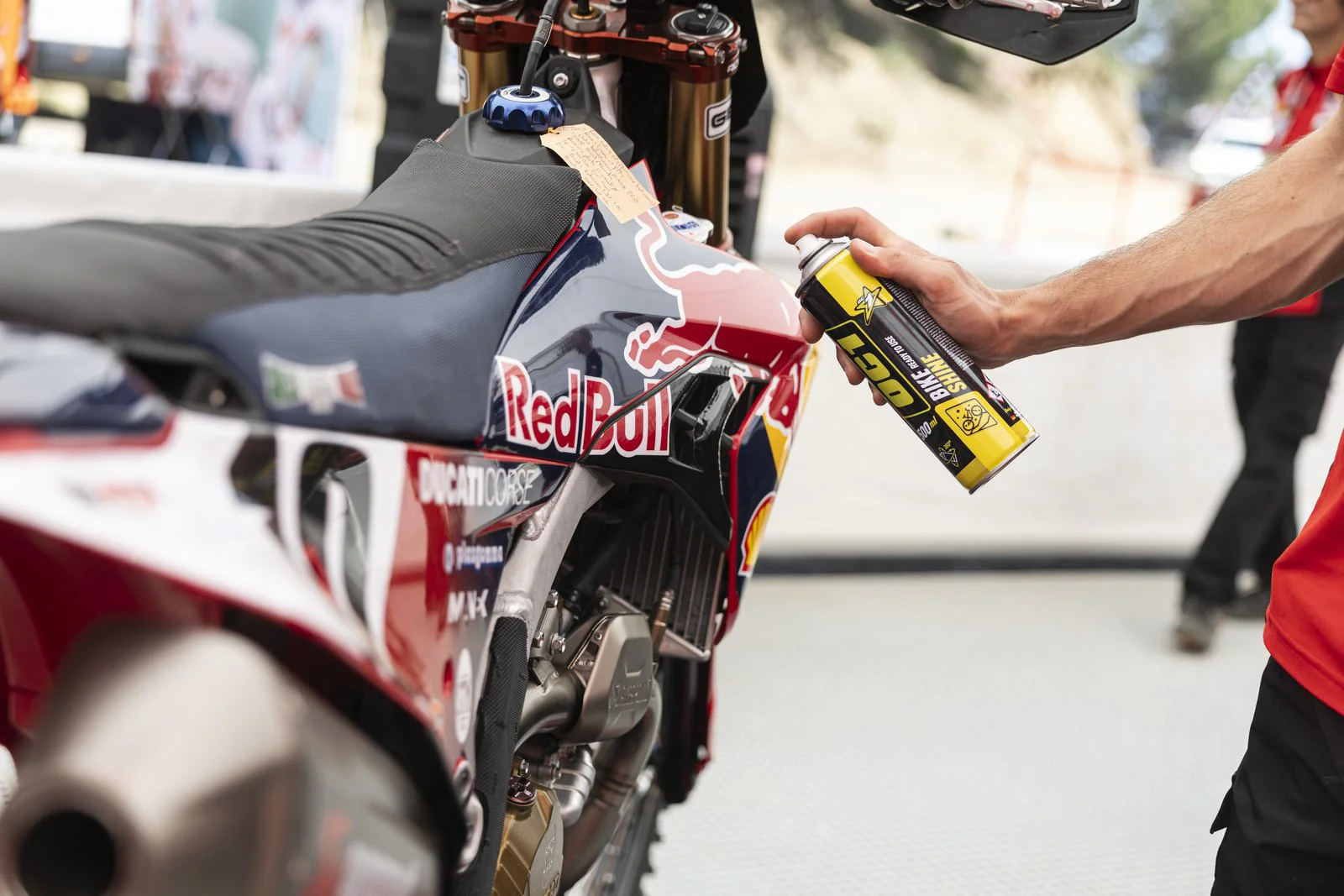
OC1 Polish & Protect is spread evenly over the chosen surface with a soft microfibre cloth. It is easiest to work section by section, for example one fairing panel at a time, rather than covering the whole motorcycle at once. The efficient formula means a small amount of product covers a large area, and it leaves an invisible protective layer without greasy residue.
Once the product has been spread, the part is gently polished with the second, clean microfibre cloth until an even shine appears. A hydrophobic coating remains on the surface, repelling water and reducing how much dirt settles.
Even a good product will not work to its full potential if it is used the wrong way or in the wrong place. The most common mistakes are:
The last point is a matter of safety. If the product accidentally gets onto a brake disc, degrease the disc before riding, for example with OC1 Brake Cleaner.
A hydrophobic coating stops water from spreading across the surface in a thin film. Instead it gathers into distinct drops that run off freely. Some of the dust and fine dirt runs off with them, and fewer water marks are left on the paint.
| Situation | Unprotected surface | Protected surface |
|---|---|---|
| Rain | Water spreads and leaves marks | Water forms drops and runs off |
| Dust and mud | Stick easily | Stick less |
| Insects | Hard to remove | Come off more easily when washing |
| Next wash | Longer and more work | Quicker and simpler |
In practice this means a motorcycle that gets dirty more slowly, is easier to wash and keeps its paint and plastics looking good for longer.
How long the coating lasts depends on how the motorcycle is used: how often it is ridden, the weather, the type of road surface and the products used for washing. Good practice is to apply the product after every thorough wash, and during a season of intensive riding at least every few washes. The signal to renew the protection is a weakening beading effect: if drops stop forming and water starts to spread, it is time to top up the coating.
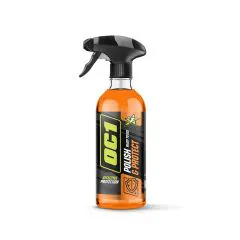
OC1 Polish & Protect is a product developed for motorcycles, scooters, bicycles and fairings. It combines polishing and surface protection in one step, so care after washing does not require several separate products. It leaves an invisible protective layer with a hydrophobic effect and a long-lasting shine. It is very economical, and application from the spray bottle is quick and simple. It works on plastics, fairings and their windscreens as well as on painted (including matt) and metal parts, so the most important exterior surfaces of the vehicle can be looked after with a single product.
Below are answers to the questions that come up most often when protecting a motorcycle after washing.
This is not recommended. Water dilutes the product and makes it harder to spread evenly, so the motorcycle should be thoroughly dried before application.
Yes. The product is designed for motorcycles and scooters as well as for bicycles - it works on the frame, plastic guards and metal parts. It should not be applied to brake discs or to the braking surfaces of rims on bicycles with rim brakes.
No. The protective layer makes it easier to keep the motorcycle clean and shortens the next wash, but it does not remove dirt. The best results come from combining regular washing with regular protection.
Washing removes dirt, but only proper protection keeps a motorcycle in good condition for longer. Three things are key: a clean and dry surface, application in the shade on cool paint, and polishing with a clean microfibre cloth. Regular use of OC1 Polish & Protect creates an invisible protective layer that repels water, reduces how much dirt sticks and makes every future care session quicker and easier.