Product added to cart
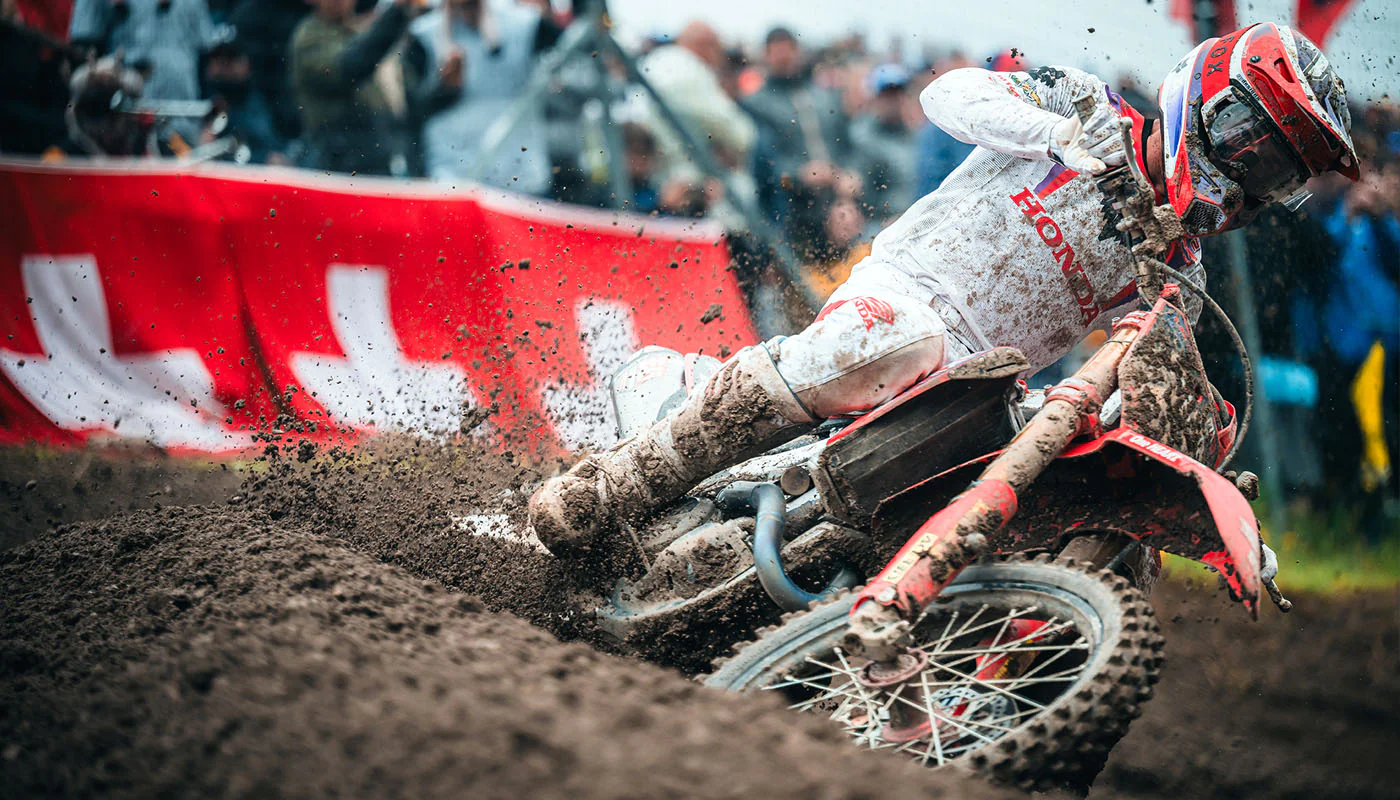
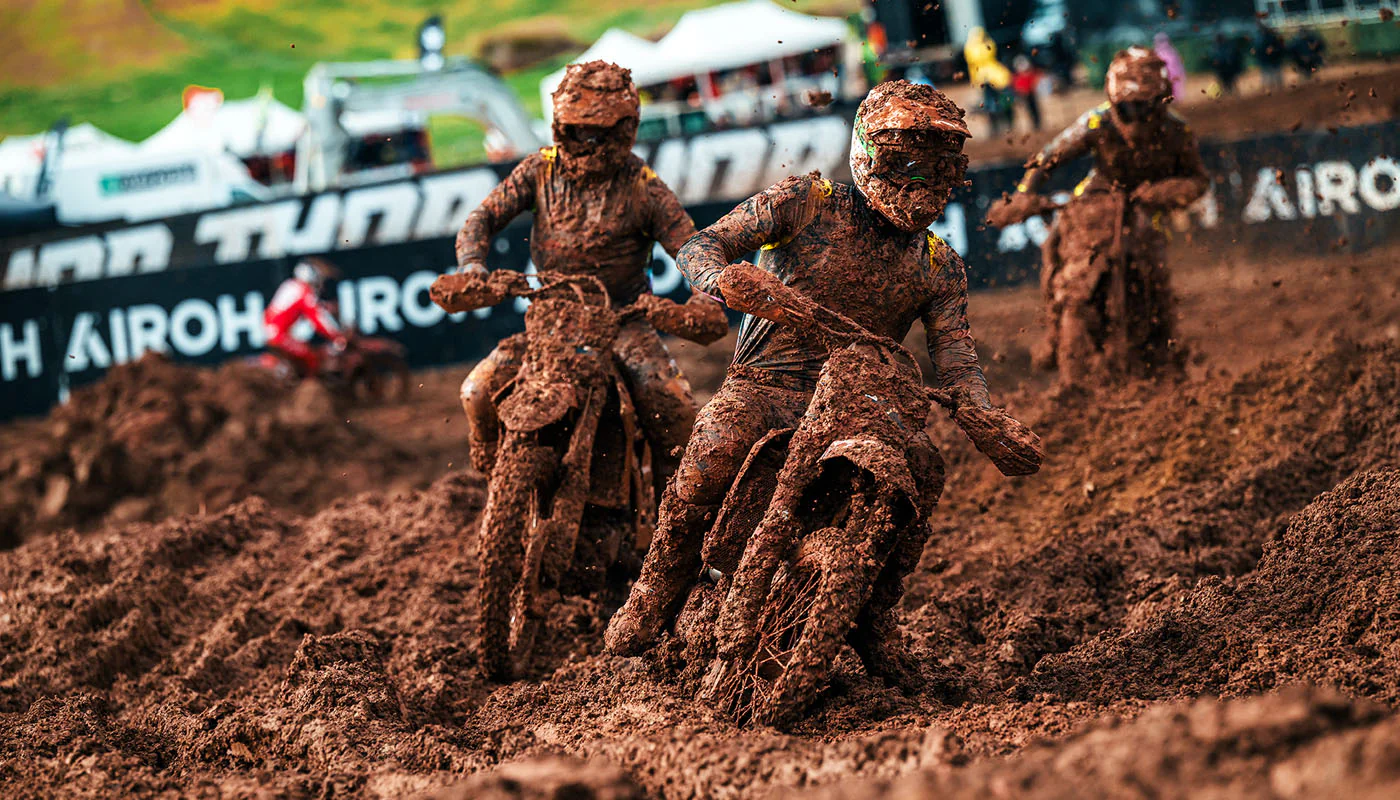
Every motocross session, enduro ride or quad outing ends the same way: the frame, plastics and drivetrain are covered in a layer of mud, sand, grass and greasy residue. Equipment in that state photographs well, but left untouched for a few days it starts working against its owner. Dried mud is not simply a cosmetic issue - it means accelerated drivetrain wear, corrosion risk and genuinely obstructed diagnostics.
The guide below covers the full washing process after off-road riding: from protecting sensitive components, through choosing the right chemistry, to drivetrain lubrication and a final inspection.
Moisture trapped inside a layer of dirt stays in contact with metal surfaces far longer than rainwater ever would. That is the shortest route to corrosion forming on bolts, calipers and frame components.
The second mechanism is more expensive. Sand and soil particles mixed with lubricant act on the chain, sprockets and tensioner rollers like a grinding paste. The same problem affects fork seals, where trapped grit scores the stanchion surface and eventually leads to oil leaks.
Mud-clogged radiator fins restrict airflow, which means the engine runs at a higher temperature. A blocked air filter reduces available power and accelerates engine wear.
There is also the diagnostic side. Under a layer of dry mud it is easy to miss a cracked plastic, a broken mount, a coolant leak or a loose bolt - and every one of those is far cheaper to find in the garage than on the track. Taken together, these mechanisms explain why regular washing pays off both in the service budget and in day-to-day use.
A well-organised washing area cuts the whole process in half. The basic kit includes:
Placing the bike on a workshop stand is also worth the effort. A raised wheel allows the drivetrain to be rotated freely during cleaning and later during lubrication. One piece of equipment, however, raises more questions among off-road riders than any other and deserves separate treatment.
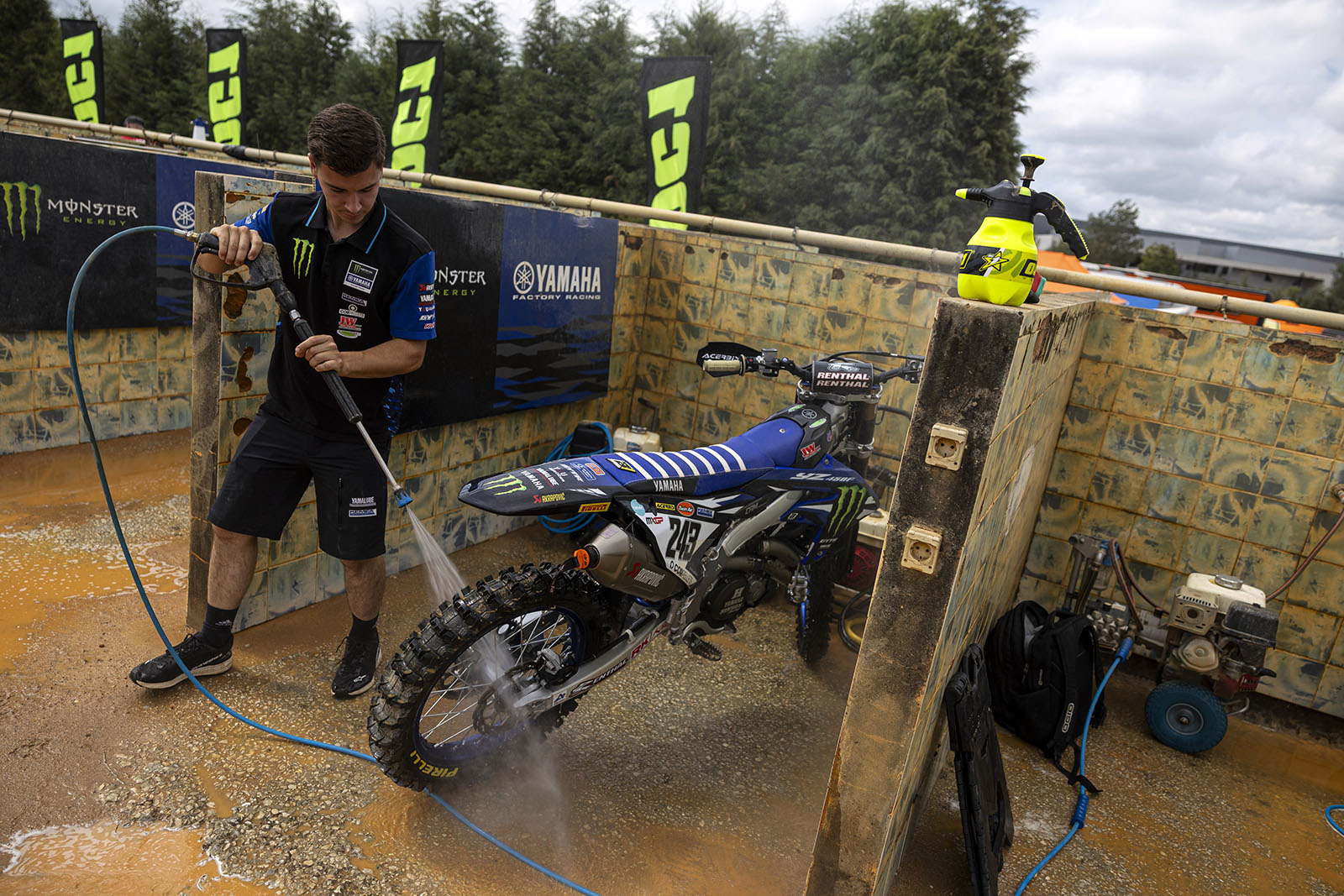
A pressure washer speeds up the removal of heavy mud considerably, but it demands discipline. A high-pressure jet can flush grease out of bearings, damage fork seals, bend radiator fins and force water under graphics and into electrical connectors.
Safe practice means a fan nozzle, a minimum distance of 40–50 cm and giving a wide berth to wheel hubs, steering head and swingarm bearings, fork seals, radiators, the injection system, the ignition coil and the wiring loom. The air filter should be protected or removed beforehand, and the exhaust outlet plugged.
The process consists of nine stages and, with fresh mud, takes under half an hour. Sequence matters here: each step prepares the surface for the next, and skipping any of them usually means more work at the following wash.
The exhaust is plugged and exposed electrics are covered. The motorcycle should be cool - chemistry applied to a hot engine or exhaust evaporates too quickly and can leave streaks.
The first contact with water has a single purpose: to remove sand and larger clumps of mud before they start acting as an abrasive under the brush. Wetting the surface before applying the product also matters because the cleaner then spreads evenly instead of drying in patches.
The choice of chemistry makes the biggest difference to the result. Household detergents can be too aggressive for anodised aluminium, paintwork and rubber components, and some of them leave a residue on plastics.
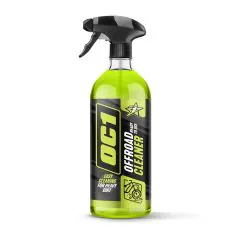
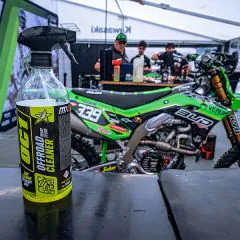
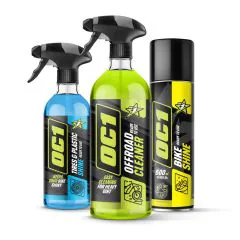
OC1 Offroad Cleaner 950 ml is a ready-to-use product developed for cleaning off-road motorcycles, quads and bicycles. It dissolves mud, insect marks and greasy contamination while remaining safe for every surface on the machine - plastics and fairings, metal parts, tyres, rims, brakes, helmet and visor.
The trigger sprayer switches between foam and liquid, which allows the application to be matched to the situation: foam clings longer to vertical surfaces where dirt is heavy, whilst the liquid setting suits quick cleaning after a light training session. The formula works without vigorous scrubbing, which limits the risk of swirl marks. For workshops, race teams and intensive use, the same formulation is available in a larger container as OC1 Bike Cleaner 5 l.
The product is applied from the bottom upwards, across the whole machine.
The cleaner should be left on the surface for 1–2 minutes, in the shade and on a cool machine. This stage does most of the work that would otherwise have to be made up with a brush. Particularly stubborn areas - around the drivetrain, sprockets and rims - can be worked over in the meantime with a soft brush and no pressure.
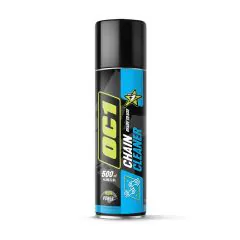
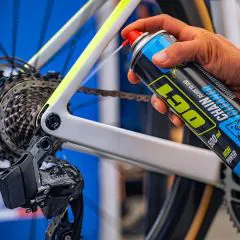
Drivetrains that need deeper degreasing are handled by OC1 Chain Cleaner 500 ml, which removes baked-on dirt and deposits, whilst rims and hubs are covered by OC1 Wheel Cleaner 500 ml in the form of a stable foam.
Rinsing runs from the top down and continues until the product is completely removed. Cleaner left to dry on the surface can leave streaks, particularly in hard-water areas.
Compressed air clears water from places a cloth cannot reach: under the fairings, around the sprocket, from connectors and cable runs. The remaining surfaces are finished with microfibre. A short ride at low revs afterwards helps evaporate residual moisture from the braking system.
Leaving a motorcycle wet overnight is one of the most common and most expensive shortcuts.
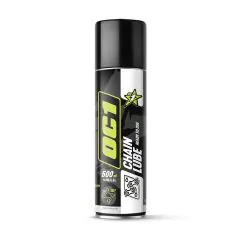
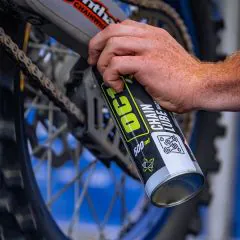
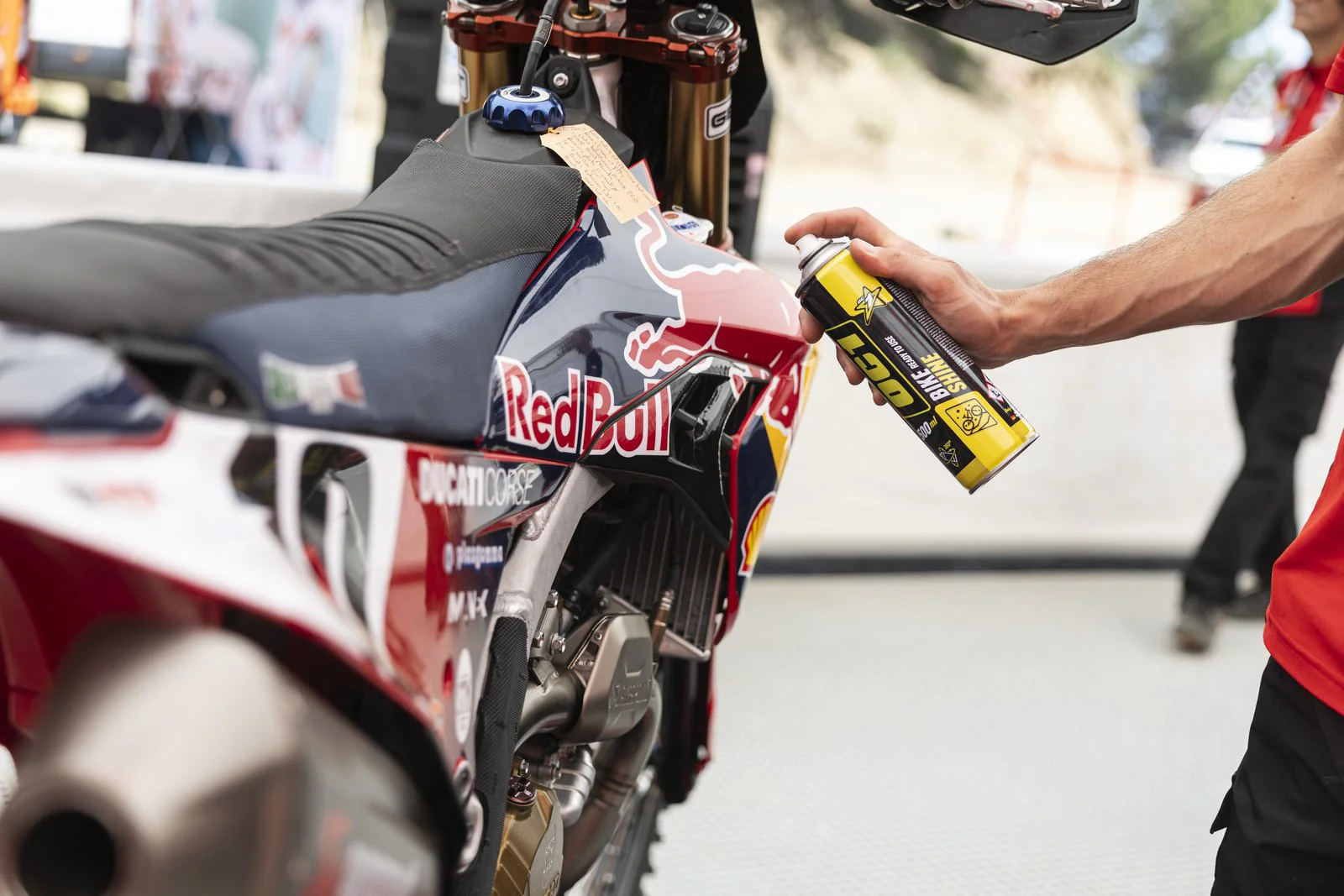
Washing removes dirt, but it removes chain lubricant along with it. The drivetrain needs re-lubricating after every thorough wash, on a slightly warm and completely dry chain. OC1 Chain Lube 500 ml, an aerosol with a 360° valve, resists water and mud, protects against corrosion and leaves a durable protective coating. Excess product should be wiped away with a clean cloth so that it does not attract dust. Why this step matters so much off-road is explained in the guide to chain lubrication in motocross.
An optional stage, but a worthwhile one on heavily used equipment. OC1 Polish & Protect 450 ml leaves a hydrophobic coating that makes the next wash quicker, whilst OC1 Tires & Plastic Shine 450 ml works antistatically and brings out the depth of colour in plastics, reducing how quickly dust settles again. The whole protection stage is described step by step in how to protect a motorcycle after washing.
A clean motorcycle is the best opportunity for a few minutes of checks: chain tension and wear, sprocket condition, fork seal integrity, play in the steering head and swingarm bearings, brake pad condition, torque on key fasteners and radiator airflow.
Frequency depends primarily on the conditions the machine has been ridden in. After training in mud or sand, the full process should take place the same day. After a race weekend, washing is best carried out straight after the final moto and combined with an extended inspection, since race loads are what reveal play and leaks fastest.
A short, dry session does not call for the full procedure - waterless cleaning and a microfibre wipe are enough. Before a longer break, whether seasonal or a few weeks, the motorcycle should go through a complete wash, careful drying, drivetrain lubrication and surface protection.
The practical rule is straightforward: the sooner after riding, the less work involved. Fresh mud comes off in minutes; the same mud after three days calls for soaking and a brush. Access to water, however, is not always available the moment the bike leaves the track.
In the paddock, on a trip away or between motos, waterless cleaning does the job. OC1 Universal Cleaner 450 ml works immediately, with no rinsing - it removes fresh contamination and hard-water marks, masks minor scratches and strengthens colour. It is a supplementary solution rather than a replacement for a full wash after a session in mud.
Most of the damage caused during washing comes down to a handful of repeated habits. They are worth knowing because their consequences usually surface only after several months of use.
The points below are the ones that come up most often in conversations with riders and off-road equipment owners.
Can a motocross bike be washed with a pressure washer?
Yes, provided a distance of 40–50 cm is maintained, a fan nozzle is used and bearings, fork seals, radiators and electrics are avoided. The air filter and exhaust need protecting beforehand.
How soon after riding should a motorcycle be washed?
Ideally the same day, once the engine has cooled. Fresh mud dissolves without any scrubbing.
Does the chain need lubricating after every wash?
Yes. Water and cleaning products strip the lubricant film, so the drivetrain requires re-lubrication on a dry, slightly warm chain.
Is washing-up liquid suitable for cleaning a motorcycle?
It is not a good choice. Household detergents are not formulated for contact with anodised aluminium, technical rubber and drivetrain components, and regular use can accelerate their degradation.
How can a motorcycle be cleaned without access to water?
With a waterless cleaning product such as OC1 Universal Cleaner - spray the surface and wipe it down with microfibre.
How long does a proper post-training wash take?
With a well-organised area and fresh mud, the whole process including drivetrain lubrication takes 20–30 minutes.
Regular washing is the cheapest form of servicing an off-road motorcycle can receive. A quarter of an hour after each session translates into a longer-lasting drivetrain, healthy suspension, faults caught early and equipment that still looks and performs as it should several seasons later.
Three elements matter most: a short reaction time after riding, chemistry formulated for two-wheelers and a consistent sequence of steps - clean, dry, lubricate. OC1 Offroad Cleaner fits that routine equally well after a light training session and after the muddiest race weekend, and combined with Chain Lube and Polish & Protect it forms a complete care kit for off-road equipment.
Only Pure Performance.