Product added to cart
Changing the graphics on motocross plastics, peeling an old dealer sticker off a fairing or replacing race numbers usually ends the same way: a sticky layer of adhesive stays on the surface, collects dust and does not come off with a normal wash. Tar from hot asphalt, tree sap and dried oil stains behave in a similar way. Removing glue from a motorcycle by force, with a blade or with whatever solvent happens to be at hand often ends in scratches or dull paint.
It is more effective and safer to dissolve this kind of dirt with a product that works long enough to soften the residue and then lets it simply be wiped away. Patience, the right tools and protecting the surface afterwards are what matter most.
Stickers and films are held on by pressure-sensitive adhesive, which by design stays slightly pliable and bonds firmly to the surface underneath. Over time, sunlight and changes in temperature make it partly harden and work its way into the micro-roughness of the surface. When the sticker is peeled off, the adhesive layer splits: part of it comes away with the film and part stays on the paint or plastic.
Tar, sap, oil and wax are similar in nature - they are greasy or resinous substances that do not dissolve in water. A normal wash copes with road grime and fresh stains, but it will not usually remove dried adhesive, tar or sap. What is needed is a product that breaks down grease and adhesives without attacking the surface underneath.
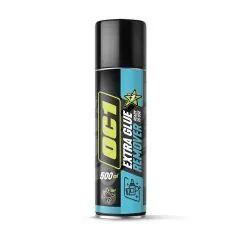
The most common situations are changing graphics and stickers on plastics, removing residue left by protective film or race numbers, and preparing the surface before applying new graphics. According to the manufacturer, OC1 Extra Glue Remover leaves no greasy film, so a new sticker can be applied straight after cleaning.
The second group is dirt picked up on the road: tar and asphalt on the lower parts of the fairings, the swingarm and the wheels, sap after parking under a tree, oil stains from the chain or engine, and white marks left by wax or polishing compound. On bicycles the product works well for removing sealant residue and rim tape - more about the sealants themselves can be found in the article about tubeless tyre sealants. The fresher the dirt, the easier it is to remove.
The manufacturer of OC1 Extra Glue Remover lists paint, carbon, aluminium, metal and plastics, as well as wood and stone. The product is non-corrosive, and the product page states that it is safe for polycarbonate, the material helmets and visors are made of.
Even so, a test in an inconspicuous spot is always carried out before first use. This applies above all to painted and lacquered helmet parts, because according to the manufacturer some paints may react to the solvents it contains. The general rules for looking after the shell are covered in the guide on how to care for a motorcycle helmet. Matt paint, wrap and PPF films and rubber seals also call for caution - the product page does not cover them separately, so the result of the test decides whether to use it. The product is not applied to hot parts such as the engine or the exhaust.
| Type of dirt | Dwell time | Tip |
|---|---|---|
| sticker adhesive residue | 2–3 min | plastic scraper |
| old, hardened adhesive | 3–4 min | second coat of product |
| tar and asphalt | 2–3 min | wipe without pressure |
| sap, oil, wax | 2–3 min | repeat if needed |
The procedure combines the OC1 Extra Glue Remover manufacturer's instructions with generally accepted detailing practice. The product is used at 5–25 °C, in a well-ventilated place, wearing gloves and safety glasses.
The surface must be dry and free of loose dirt, because sand dragged along by a cloth scratches the paint. Light dust and fingerprints can be picked up beforehand without water, as in the guide on how to clean a motorcycle without water. First, a small amount of product is applied in an inconspicuous spot, and after a few minutes the surface is checked for any change in appearance.
It is worth warming an old sticker with a hair dryer, kept moving about ten to fifteen centimetres from the surface. The heat softens the adhesive, so the film can be peeled off slowly at a low angle and less residue stays behind. A heat gun easily overheats plastic and paint, so it is better not to use one. A plastic scraper or an old card is used to lift the edge - a metal blade leaves scratches.
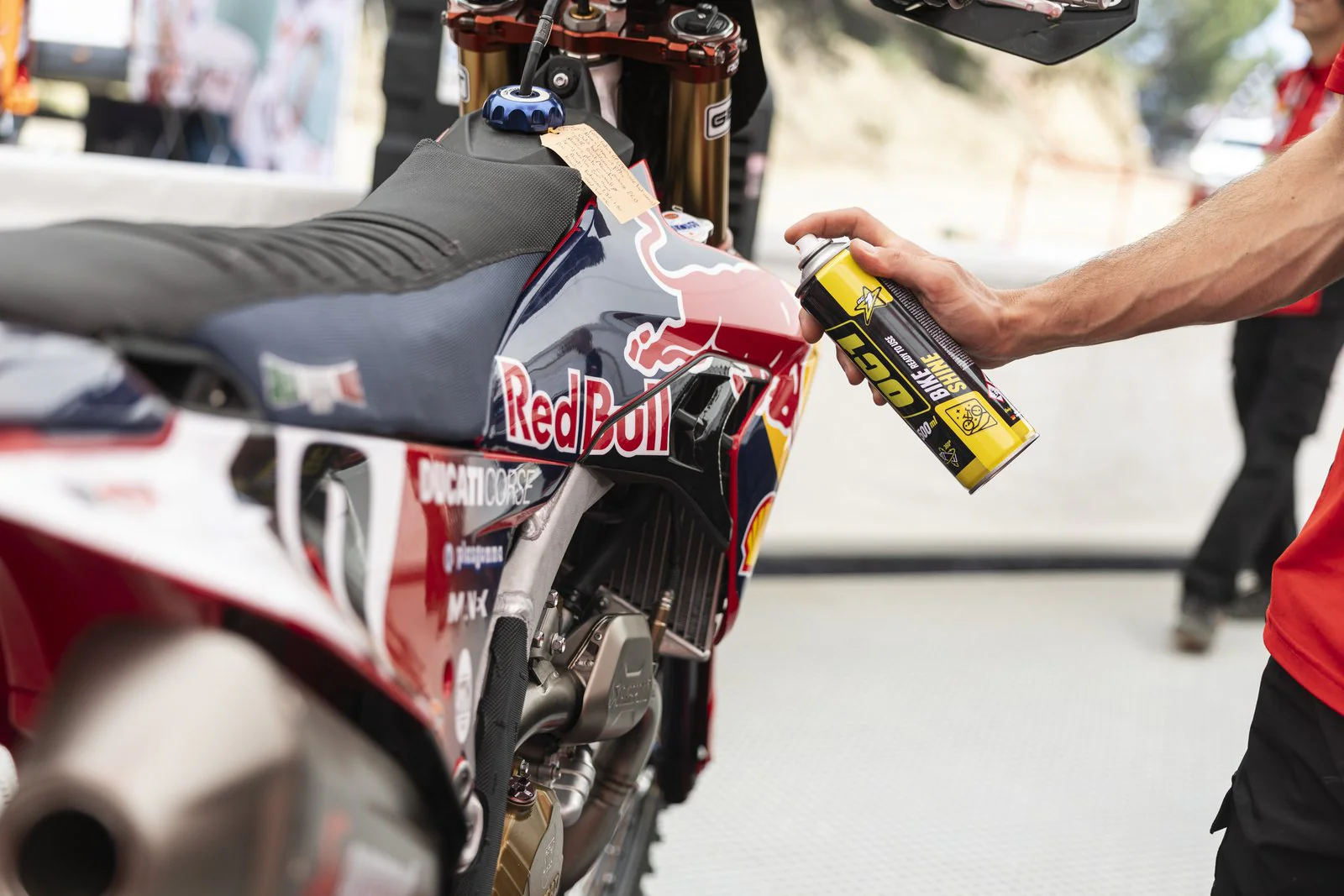
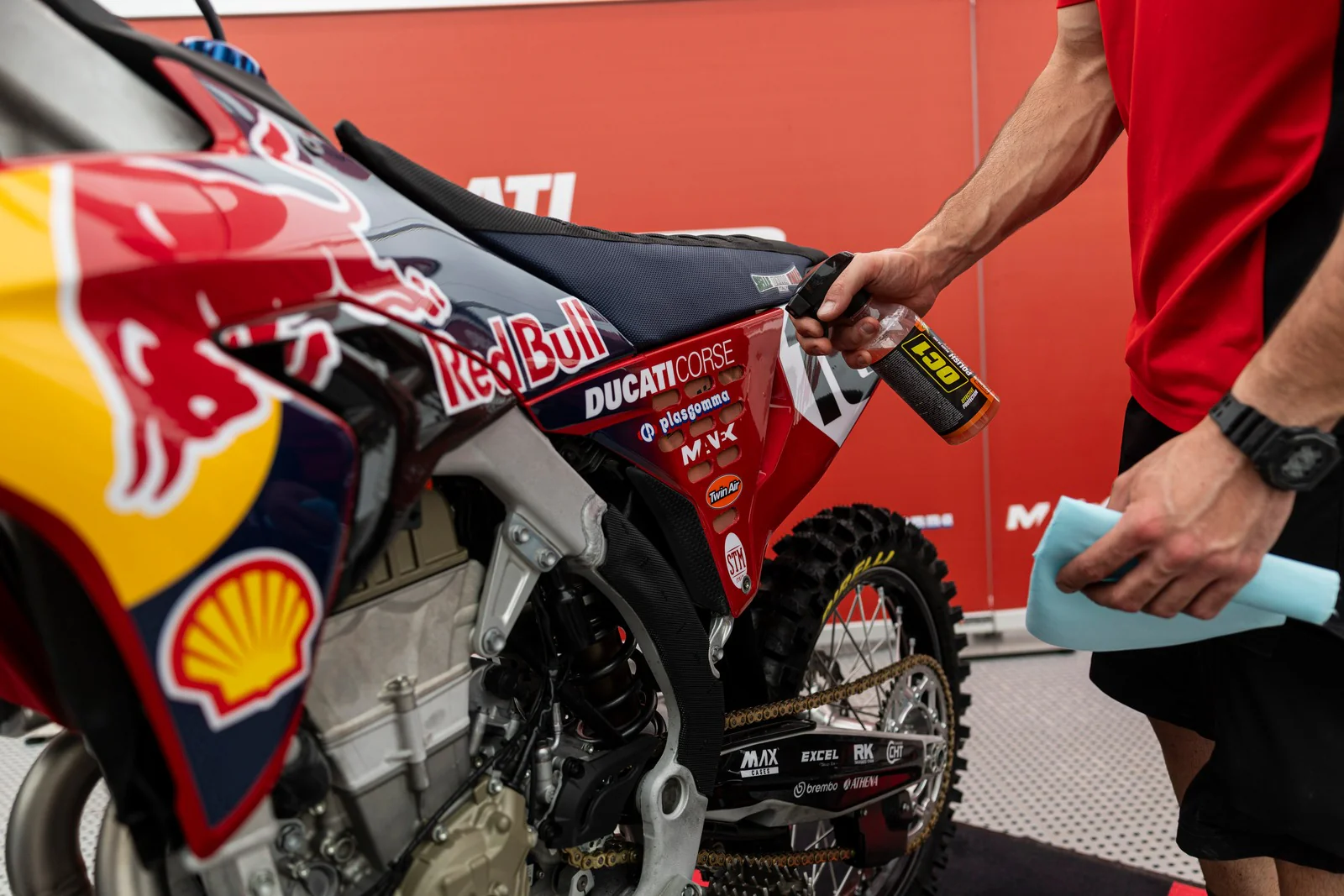
The product is applied in an even layer from a distance of about 15–20 cm, and a little more generously on thicker deposits. The manufacturer recommends leaving it to work for 2–3 minutes, or 3–4 minutes on old adhesive. Slow evaporation gives it time to dissolve the residue, so large areas can be cleaned section by section without rushing.
The dissolved adhesive is picked up with a dry, clean microfibre cloth, gently and without pressing hard. A plastic scraper helps to slide off thicker residue. If anything remains, the treatment is repeated rather than scrubbing by force.
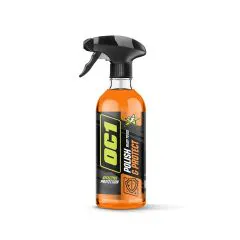
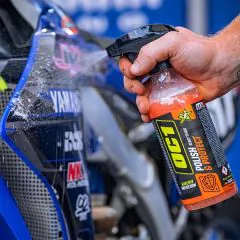
Finally, the surface is wiped with a clean cloth or rinsed with water. The product also dissolves wax, so the cleaned area loses its protective layer. After washing the motorcycle, for example with OC1 Motorcycle Cleaner, it is worth restoring it with OC1 Polish & Protect. The details are described in the guide on how to protect a motorcycle after washing.
Most damage happens when the job is rushed:
OC1 Extra Glue Remover is a 500 ml aerosol made in Germany that removes adhesive, sticker residue, tar, sap, oil, wax and ink. It evaporates slowly, leaves no marks and is non-corrosive. It works on road and off-road motorcycles, quads and bicycles. It is extremely flammable and irritant, so it requires ventilation, skin and eye protection, and storage out of the reach of children and away from temperatures above 50 °C.
Below are answers to the most common questions about removing glue and stickers from a motorcycle.
According to the manufacturer, OC1 Extra Glue Remover is non-corrosive and does not damage paint. On unusual or delicate finishes, such as matt paint or a painted helmet, it is still worth doing a test in an inconspicuous spot.
The sticker is best peeled off after warming it with a hair dryer; the adhesive residue is then covered with remover and left for 2–3 minutes. The dissolved adhesive is picked up with a microfibre cloth or a plastic scraper.
Tar and asphalt are dissolved with a product for removing greasy deposits, left on for a few minutes. The dirt is then wiped off with a microfibre cloth without pressing hard, and the cleaned area is washed and protected.
Removing glue from a motorcycle, as well as tar, sap or greasy stains, takes time rather than force. Warming the sticker with a hair dryer, the right dwell time, a plastic scraper instead of a blade and a test in an inconspicuous spot make it possible to clean paint, plastics and metal without scratches or discolouration. The last stage is washing and restoring the protective layer.
OC1 Extra Glue Remover makes it easier to change graphics, prepare surfaces for new stickers and remove road dirt, and thanks to its slow evaporation it leaves time for careful work, even on large areas.