Product added to cart
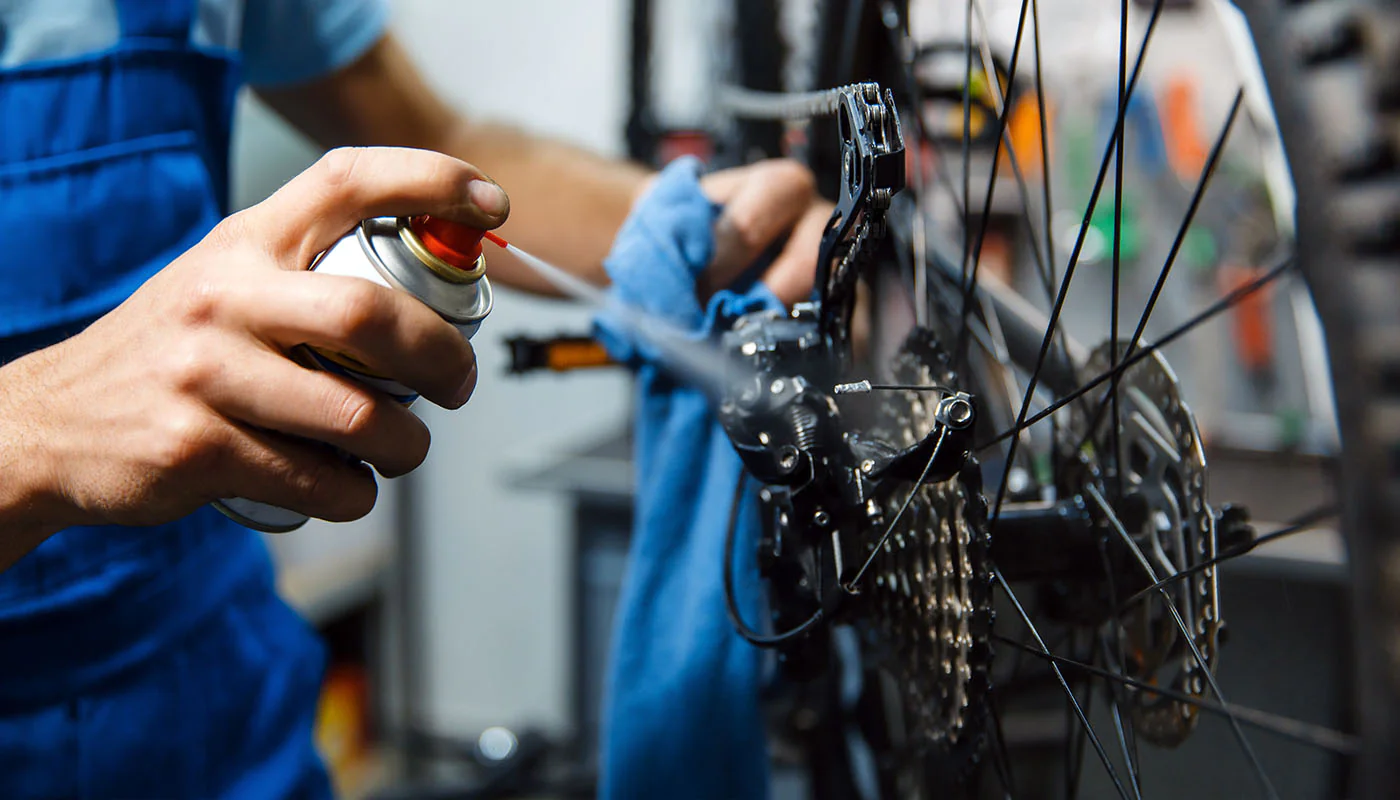
WD-40 is one of the most recognisable products in any workshop. Its versatility means many cyclists reach for it when caring for their chain too. This, however, is a mistake that can cost more than the saving on dedicated lubricant. Although WD-40 excels at loosening rusted bolts or cleaning frames, it wasn't designed for long-term lubrication of components exposed to high loads and variable weather conditions.
What does WD-40 actually do and why doesn't it work as a lubricant?
WD-40 is primarily a multi-purpose product, its name deriving from "Water Displacement, 40th formula". It was created as a corrosion protection agent and moisture displacer, not as a long-lasting lubricant. This fundamental difference is crucial for bicycle chains.
Rapid evaporation and lack of lasting protection
The main problem with WD-40 is its volatile formula. The product initially penetrates the chain and provides momentary lubrication, but evaporates quickly. After just a few hours, sometimes even minutes of intensive riding, the chain is left practically dry and unprotected. Every chain link operates under enormous pressure — particularly when pedalling uphill or accelerating rapidly. Without an appropriate protective layer, metal grinds against metal, leading to accelerated wear.
WD-40 is also not designed to withstand the high temperatures generated during riding. Heat produced by friction further accelerates the product's evaporation, leaving the chain completely defenceless. In practice, this means that even if you apply WD-40 before every ride, it won't provide sufficient protection throughout the entire outing.
Attracting dirt and worsening problems
Paradoxically, WD-40 not only fails to protect the chain but can actively harm it. After partial evaporation, it leaves a light, sticky layer that acts like a magnet for dust, sand, and other contaminants. These particles work like sandpaper, rapidly destroying chain links, cassettes, and chainrings. The more dirt settles on the chain, the faster the degradation process of the entire drivetrain progresses.
In wet conditions, the problem intensifies. Water quickly washes away WD-40 residue, and the mixture of dirt and moisture creates an abrasive paste that acts destructively on every drivetrain component. The result? Premature wear of components that, with proper care, could serve considerably longer.
What are the consequences of improper chain lubrication?
The consequences of using an inappropriate chain lubricant extend far beyond aesthetic discomfort. The problem begins with noise — clicking, creaking, and grinding are the first warning signals. But the real dangers are more serious and concern both safety and your wallet.
Accelerated wear and rising costs. A chain lacking proper protection wears up to 50% faster than one properly maintained. Worse still, a worn chain damages the cassette and chainrings, which are considerably more expensive to replace. Irregular lubrication or using inappropriate products can halve the lifespan of the entire drivetrain. In practice, this means expenditure of several hundred pounds on new components — considerably more than the cost of good chain lubricant.
Derailleur problems and riding safety. A contaminated and poorly lubricated chain doesn't cooperate smoothly with derailleurs. The result? Delayed gear changes, chain skipping, and in extreme cases — complete drivetrain seizure whilst riding. Such a situation on a steep descent, at high speed, or on a busy road can lead to dangerous crashes.
Sand and contaminants settling on the chain also increase the risk of sudden link breakage. Although modern chains are durable, systematically exposing them to operation without proper protection reduces their structural integrity. Chain breakage during intensive pedalling can lead to falls and injury.
How to properly care for a bicycle chain
Professional chain care is a straightforward process that doesn't require specialist mechanical knowledge. Consistency and appropriate products are all that's needed.
Chain cleaning — the foundation of proper maintenance
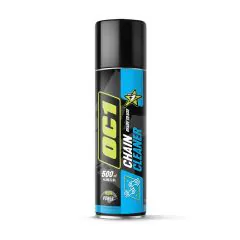
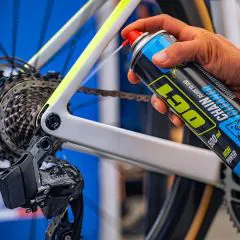
Before each lubrication, the chain must be thoroughly cleaned. No lubricant, however good, will work on a dirty surface. For cleaning, it's worth using a specialist product such as OC1 Chain Cleaner, which effectively removes dried lubricant, sand, dust from brake pad wear, and baked-on dirt. The product works quickly and leaves no residue, allowing immediate progression to lubrication.
The cleaning process doesn't require chain removal. Simply apply the product to the chain, allow it to work for a moment, then wipe with a clean cloth. For particularly dirty chains, a dedicated chain cleaning brush is worthwhile — it makes reaching the hard-to-access spaces between rollers easier.
Choosing the right lubricant — three variants for different conditions
After cleaning the chain, it's time for lubrication. The key to success is matching the lubricant to your riding conditions. OC1 offers three formulas, each designed with specific applications in mind.
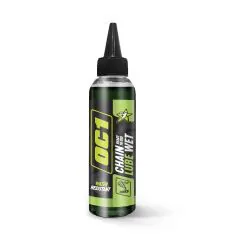
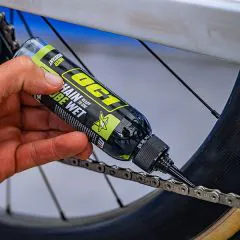
OC1 Chain Lube Wet is the number one choice for cyclists riding in rain, mud, and challenging off-road conditions. The formula creates a durable protective layer that doesn't wash off with water and protects the chain from corrosion. One application is sufficient for several outings, even in wet terrain. The product is safe for chains with O-ring and X-ring seals, making it a universal solution for motorcyclists too.
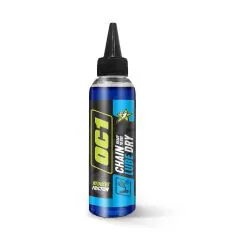
OC1 Chain Lube Dry is the ideal option for dry, dusty routes. Thanks to its special formula, it doesn't attract dust and sand, meaning the chain stays clean considerably longer. The lubricant works brilliantly in summer and when riding on dry, sandy trails. It provides excellent corrosion protection and significantly reduces friction.
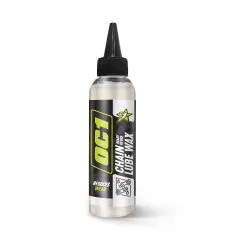
OC1 Chain Lube Wax is the most advanced solution, based on wax. It reduces wear by over 80% and eliminates unpleasant friction sounds. After application, it forms a dry coating that doesn't collect dirt. This is the choice of road cyclists and those valuing maximum cleanliness and drivetrain efficiency.
Application technique — less is more
Proper lubricant application is as important as its quality. The most common mistake is applying too much product. Excess lubricant runs onto rims, tyres, and frame, collecting dirt and dust along the way. The chain needs lubricant inside the links, not on their surface.
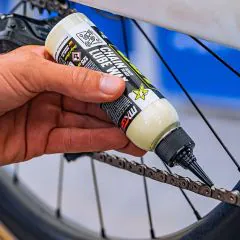
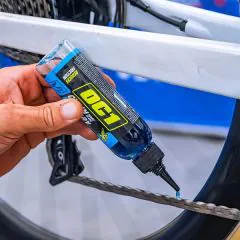
Apply one drop of lubricant to each chain roller, rotating the pedals backwards. Then complete several full crank rotations, passing the chain through all gears — this allows the lubricant to spread evenly and penetrate the rollers. After 5–10 minutes, wipe the chain with a clean cloth, removing excess lubricant from the outer surface. Leave only what has penetrated inside the links — that's where it's most needed.
Lubrication frequency depends on riding conditions. After riding in rain or mud, the chain requires lubrication immediately. In dry conditions, lubrication every 200–300 km is sufficient. The characteristic dry sound of a chain is a sign that maintenance time has arrived.
Proper lubrication is an investment, not a cost
Using dedicated chain care products isn't a perfectionist's fancy — it's a sensible decision for every cyclist. WD-40 has its place in the workshop, but decidedly not on a bicycle chain. Five minutes spent on proper cleaning and lubrication saves hundreds of pounds on new components and guarantees safe, smooth riding. Professional lubricants such as OC1 Chain Lube may seem expensive compared to universal sprays, but in the longer term they pay back many times over by extending the lifespan of the entire drivetrain.