Product added to cart
Mountain Biking – A Complete Guide to MTB Disciplines
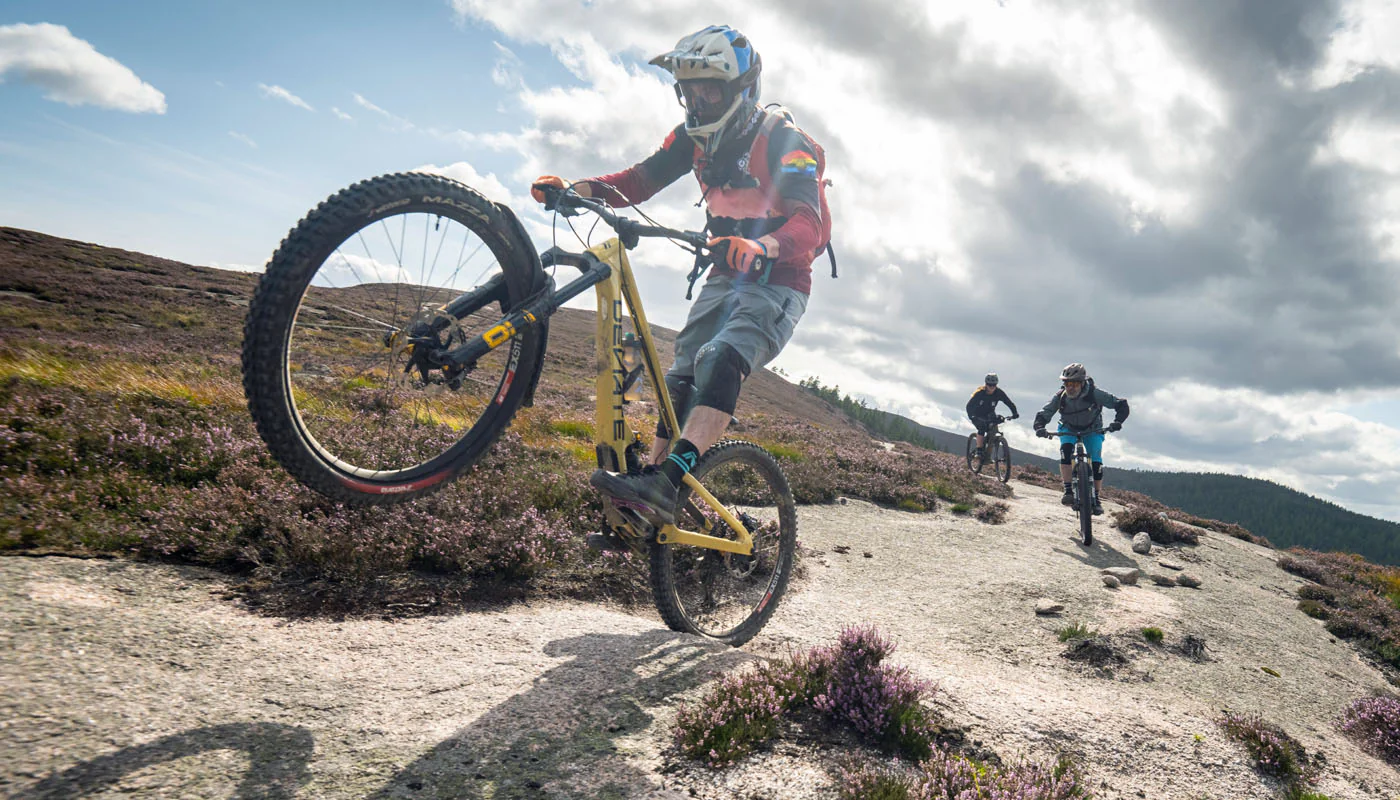
Your first time on a singletrack trail, when rocks throw the wheel in all directions, a root tries to wrench the handlebars from your grip, and you're barely maintaining balance — and suddenly you realise you've just fallen in love with MTB. That feeling, that mixture of fear, excitement and pure joy when you finally reach the bottom of the descent — that's precisely what keeps us on the trails.
Mountain biking isn't one sport — it's an entire galaxy of different disciplines, styles and riding philosophies. From cross country races where endurance and tactics count, through wild downhill descents, to urban streets where every kerb becomes an obstacle to conquer. Each discipline demands a different approach, different equipment and a different mentality. In this guide, we'll cover the main MTB categories and show what distinguishes them.
From cross country to downhill — racing categories in MTB
Cross Country (XC) is the marathon of mountain biking. Courses typically span 20–40 kilometres and combine long climbs with technical descents. This isn't riding for the impatient — here, strategy, endurance and the ability to manage energy throughout the race win the day. XC bikes are lightweight machines with 100–120 mm of suspension, optimised for climbing and efficient pedalling. If you enjoy long expeditions and don't fear hard graft, XC is your calling.
Downhill (DH) is the opposite of XC — pure adrenaline on a vertical drop. Riders start individually with one objective: descend as fast as possible. Rocks the size of footballs, jumps where momentarily you see nothing but sky, and corners where any mistake means a crash. DH bikes are armoured vehicles with 200 mm of suspension front and rear, often weighing over 18 kg. Nobody pedals these uphill — that's what chairlifts are for. If you think "what do I need a rear brake for", DH is for you.
Enduro combines the best of both worlds — linking long, often day-long routes with timed downhill stages. The climb is merely transport to the summit; the descents are what count. Enduro bikes have 150–170 mm of suspension and are more versatile than DH machines — they must handle both descending and climbing. This discipline suits those who want the thrill of descents without carrying the bike uphill all day.
Four Cross (4X) and Dual Slalom are short, intense races for those who enjoy direct confrontation. In 4X, four riders start simultaneously and race down a course full of jumps, corners and bumps. Contact is inevitable, and battles for the racing line often end dramatically. Dual Slalom is a one-on-one duel on parallel courses with gates. Quick reflexes, aggressive riding and zero room for error.
Beyond racing — freeride, dirt jumping and urban
Not everyone wants to race against time or opponents. For many, MTB is expression, creativity and developing one's own style. These disciplines have no finish line or scoring — only style and the satisfaction of clean execution.
Freeride is freedom in its purest form. No designated trails, no rules. You ride where you want and how you want — natural terrain, over rocks, obstacles, drops. Freeride bikes are solid constructions with 160–180 mm of suspension, ready for anything. Here, what matters is the line you devise yourself and the ability to conquer obstacles others avoid.
Dirt Jumping is the artistic form of MTB. A series of earthen jumps where riders perform tricks in the air — tailwhips, barspins, backflips. The bikes are small, rigid (hardtail) and tough — they must withstand hard landings after failed tricks. This discipline suits those with abundant patience, as every new trick means dozens of crashes before the first clean execution.
Trials is chess on wheels. Riders navigate extreme obstacles — rocks, pallets, barrels, walls — without touching foot to ground. Precision, balance and the ability to jump from standstill to heights that seem impossible are what count. Trials bikes are minimalist machines without saddles, with very low tyre pressures for maximum grip.
Urban/Street brings MTB to the city. Stairs, handrails, walls, benches — every element of urban architecture becomes an obstacle. This discipline sits close to BMX but on larger wheels. It demands creativity in viewing one's surroundings and resilience to painful crashes on concrete.
Technology evolution — from rigid frames to full automation
Mountain biking has travelled from modified cruisers of the 1970s to today's technological marvels. The first "klunkers" had steel frames, single gears and rim brakes that barely functioned. Today, we have carbon fibre frames weighing under 2 kg, electronic derailleurs responding in fractions of a second, and suspension that automatically adapts to the terrain.
Derailleurs evolved from simple 5-speed systems to today's 12-speed cassettes with enormous gear ranges. Modern 1x12 provides everything from an extremely light climbing gear to fast descending ratios, eliminating front derailleurs and simplifying the system. Suspension systems progressed from simple springs through oil dampers to contemporary units with compression, rebound and progression that can be controlled from the cockpit.
Hydraulic disc brakes have completely replaced old rim systems — they offer tremendous stopping power with minimal lever effort, work in all conditions and require virtually no maintenance. Tyres have become wider, with aggressive treads designed for specific terrains and conditions. Frame geometry evolved towards longer wheelbases, slacker angles and lower centres of gravity — all for stability on fast descents.
Maintenance — because equipment deserves respect
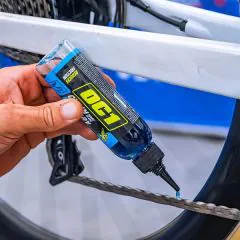
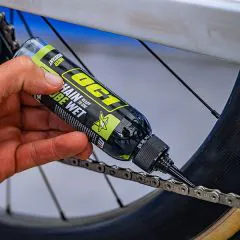
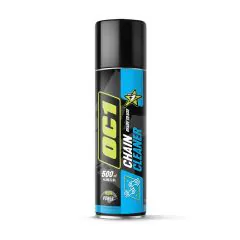
After a session through mud, streams and dust, the bike looks like a wreck — and behaves similarly if you don't attend to the basics. The key components are drivetrain, brakes and suspension. A chain contaminated with mud and sand means rapid wear of the chain, cassette and chainring alike. After every ride, it's worth quickly checking its condition and cleaning if necessary with a product such as OC1 Chain Cleaner, which effectively removes dirt without aggressive substances that damage O-rings. After cleaning, a fresh layer of OC1 Chain Lube ensures protection and smooth drivetrain operation.
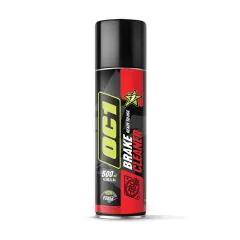
Brakes require particular attention — contaminated rotors or pads mean reduced stopping power and longer stopping distances. Periodic cleaning of rotors with OC1 Brake Cleaner restores full braking force and removes traces of oil or grease that may have migrated during chain lubrication. This proves especially important before challenging descents, where every percentage of braking power can be critical.
Suspension is a topic for a separate chapter, but the foundation is keeping dust seals and stanchions clean. Dirt and sand penetrating inside damage seals and shorten damper lifespan. Regular cleaning of the suspension legs after riding extends service intervals. Clear vision means safety — OC1 Lens Cleaner removes mud and dust from glasses or goggles, whilst OC1 Anti-Fog prevents lens fogging during intense climbs.
Summary
Mountain biking is a sport with a thousand faces. You can spend entire days climbing summits in XC races, you can plummet vertically in full downhill armour, you can build your own lines in the forest doing freeride, or seek new ways to conquer urban stairs. Each discipline requires different equipment, different technique and different mentality, but all share one thing — the connection of human, machine and terrain in a moment of pure flow.
Regardless of which path you follow in MTB, caring for your equipment forms the foundation of safety and riding enjoyment. A regularly inspected, cleaned and lubricated bike is a reliable companion for every adventure.