Product added to cart
How to Care for Motorcycle Leather? Maintenance Guide
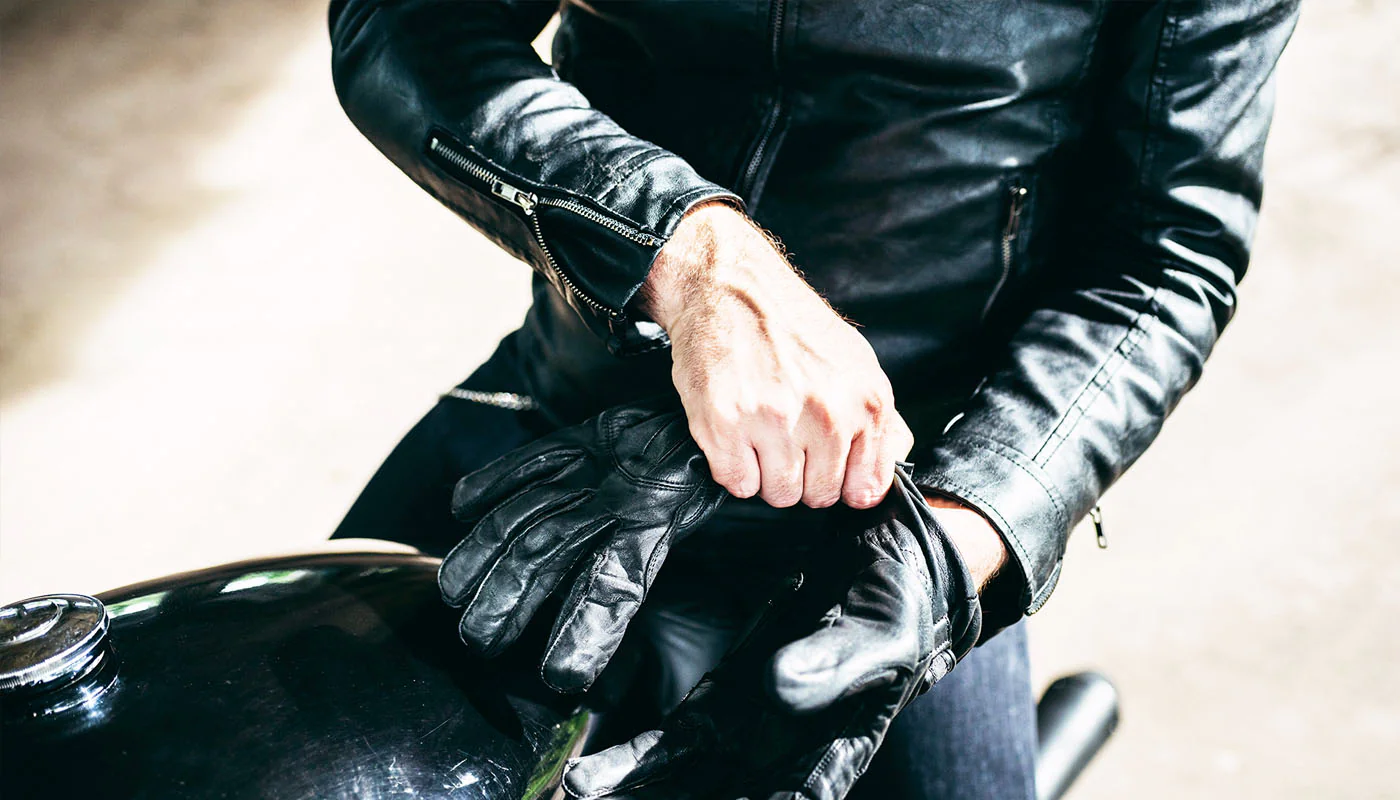
A leather suit costing several thousand pounds that looks like a jumble sale find after one season? A motorcycle seat covered in white marks from protective vests? Gloves that have lost their suppleness and are starting to crack at the flex points? These problems don't stem from poor quality leather – they're the result of neglected regular care. Motorcycle leather is exposed to conditions that ordinary shoes or jackets never have to face. Sweat, oils, UV, rain and dirt are its natural enemies. The good news? Proper maintenance can extend the life of leather equipment by several seasons.
Why does motorcycle leather require particular attention?
Leather used in motorcycle gear undergoes special treatment that gives it mechanical strength and abrasion resistance. This isn't the same leather as in shoes or handbags – it's thicker, stiffer and has entirely different properties. The problem is that this treatment makes the material more susceptible to drying out.
A motorcycle suit can accumulate more dirt and aggressive substances in a single weekend at the track than an ordinary leather jacket does in an entire year. Sweat from inside, chain oil spraying onto the outside, UV whilst parked in the paddock, plus friction against the tank and tank pad – all this accelerates the material's ageing process.
Additionally, leather "works" – it flexes at knees and elbows, stretches during riding. If it isn't properly moisturised and supple, it begins to crack in these most stressed areas. And repairing such leather often costs nearly as much as a new item.
Most common problems and their causes
Before moving on to specific solutions, it's worth understanding what we're actually dealing with.
White marks and discolouration – this is the result of mineral salts precipitating from sweat. Particularly visible on dark leather, especially where it contacts armour and protective vests. If we don't remove them promptly, they penetrate deep into the leather structure and leave permanent traces.
Loss of suppleness and cracking – leather that isn't regularly moisturised dries out. It becomes stiff, less comfortable and starts cracking at flex points. This is particularly dangerous with protective suits, where cracked leather loses its protective properties.
Dulling and colour loss – UV and dirt cause leather to lose its deep, saturated colour. A black suit starts looking grey, whilst white accents turn yellow.
Unpleasant odour – sweat absorbed into leather, particularly the interior of suits or gloves, begins to decompose and generate a characteristic, heavy smell. Ordinary washing or airing often doesn't help.
Cleaning leather items – step-by-step instructions
Regular cleaning is fundamental. This doesn't mean washing after every ride, but systematically removing accumulated dirt before it penetrates deep into the material.
Step 1: Surface preparation
Keep items away from direct heat sources and sunlight. Leather should be at room temperature – don't clean a heated suit straight after track use. Remove loose dirt with a dry, soft brush or microfibre cloth. Pay particular attention to areas where sand collects – seams, pockets, zip surroundings.
Step 2: Cleaning product application
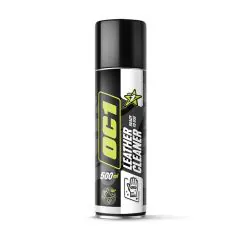
Apply cleaning product to a soft, slightly damp cloth – never directly onto leather. OC1 Leather Cleaner works excellently for this purpose, having been formulated with motorcycle leather in mind. Its formula is strong enough to remove stubborn dirt and oils whilst not drying out the material.
Work on small areas – approximately 20×20 cm at a time. Gently wipe the leather in circular motions without pressing too hard. In particularly soiled areas (knees, elbows, zip surroundings), you can leave the product for 30–60 seconds before wiping it away.
Step 3: Product removal and drying
Remove cleaning product residue with a clean, damp cloth. This is an important step – product left behind can dry out the leather. Allow the surface to dry naturally, away from radiators and direct sunlight. Drying should take 30–60 minutes depending on room temperature.
Step 4: Result check
Once dry, check whether all contamination has been removed. White marks may require repeat cleaning – sometimes the process needs repeating two or three times before the leather regains uniform colour.
Conditioning and protection – how to keep leather in shape?
Cleaning is only half the battle. Leather needs regular conditioning to keep it supple and resistant to weather conditions.
After every clean, once the leather is dry, apply an appropriate balm or conditioner. Motorcycle leather needs products with high natural wax content – these create a protective layer whilst simultaneously moisturising the material. Apply product in a thin layer, gently massaging it into the surface. Don't overdo the quantity – excess balm won't absorb and will leave a sticky film.
Pay particular attention to areas subject to greatest stress: knees, elbows, shoulders, zip transition points. That's where leather first begins losing suppleness and cracking. An extra layer of conditioner at these points is insurance against costly repairs.
Refreshing and odour neutralisation
The odour problem in leather motorcycle equipment is common, particularly in suits and gloves. Ordinary external cleaning often isn't enough because bacteria responsible for unpleasant smells nest in the material's inner layers.
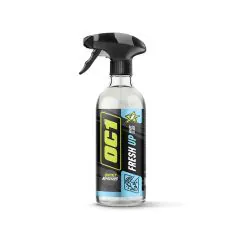
OC1 Fresh Up was created with this problem in mind. Its formula based on quaternary ammonium compounds eliminates 99.99% of bacteria, whilst silver ions neutralise the odour source rather than merely masking it. Unlike alcohol-based products that evaporate quickly, Fresh Up works longer and provides protection against renewed bacterial growth.
Application is straightforward – spray from approximately 20–30 cm distance onto interior surfaces of suits, gloves or jacket linings. After application, allow items to dry in a well-ventilated location. The product can also be used on external leather surfaces, plastics or rubber – it's universal and safe for various materials.
Care schedule – when and how often?
There's no point waiting until leather looks dreadful. Regular care requires far less effort than attempting to rescue neglected equipment.
After every track day or intensive ride: remove loose dirt with a dry cloth, check for chain oil traces. If the suit is heavily sweated, air it in a well-ventilated location and apply Fresh Up to interior surfaces.
Every 3–5 outings or once monthly: thorough cleaning with Leather Cleaner, followed by conditioning with balm. This is the time to address white marks, contamination around zips and areas particularly exposed to external dirt.
Before and after the season: full maintenance – cleaning, nourishing, checking condition of zips, Velcro and seams. A suit or jacket being stored for winter should be clean and conditioned. You doubtless know a thing or two about what leather looks like after several months in a damp garage without proper protection.
After riding in rain: dry and condition as quickly as possible. Water washes natural oils from leather, so after wet riding the material particularly needs moisturising.
Summary
Motorcycle leather can serve for years, but only if we care for it regularly. Cleaning, conditioning and protection isn't perfectionist indulgence – it's a basic requirement if we don't want to invest in new equipment every season. Remember that leather cracking in a critical area of a suit loses its protective properties. This isn't merely a matter of aesthetics but, above all, of safety.