Product added to cart
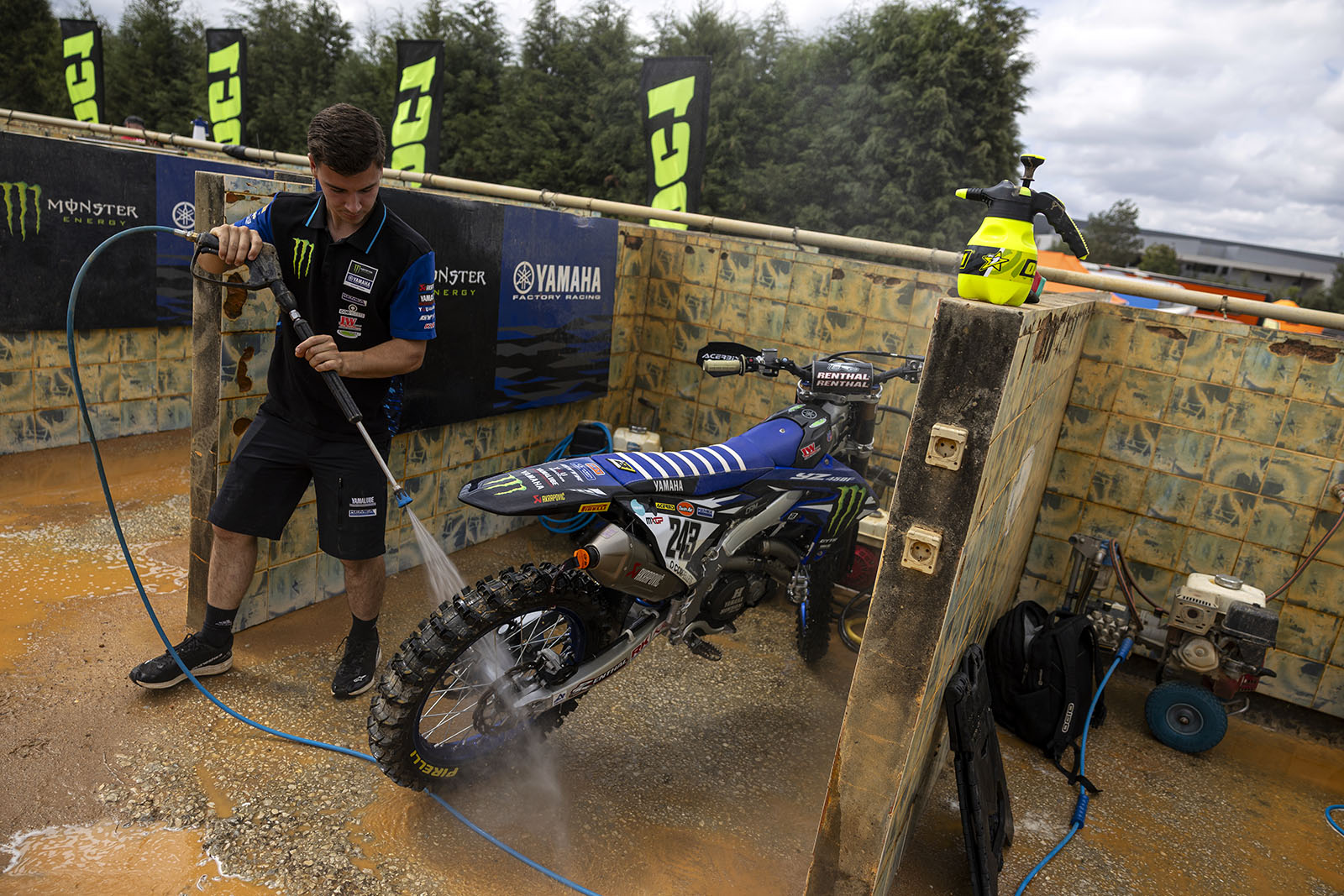
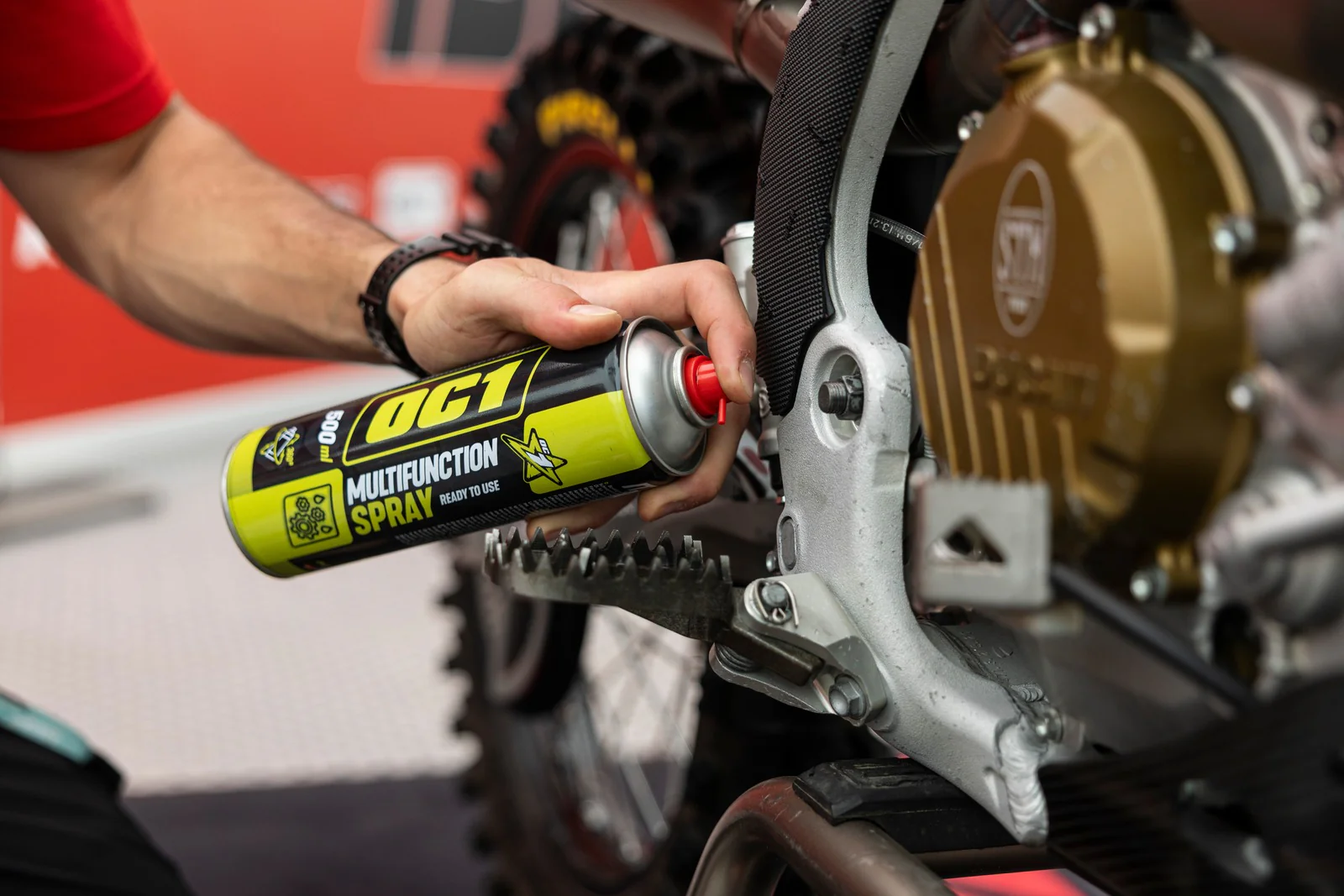
A squeaking clutch lever, a stiff seat lock, a seized fairing bolt or moisture in the switchgear after riding in the rain - these are the small faults where a multi-purpose spray for motorcycles comes in handy most often. Most of them have a common cause: water, dirt and the gradual loss of the lubricating layer on metal parts.
A product like this lubricates, displaces moisture, protects metal against rust and helps free seized joints. It is not a cure-all, though - in a few places using it is pointless, and in some it is downright dangerous.
A multi-purpose spray is a low-viscosity product that combines four functions: penetration, water displacement, lubrication and corrosion protection. Its thin consistency lets it seep into the gaps of joints, hinges and threads that thick grease cannot reach.
After application, the product pushes water out of tight spots and leaves a thin film on the metal that limits access to moisture and oxygen, and so slows down the formation of rust. The same film reduces friction at contact points, which is why squeaking stops and mechanisms return to smooth operation. With seized joints, the product works its way between the turns of the thread and loosens corrosion deposits, making the bolt easier to undo.
Regular use brings the most benefit. After washing, the product displaces water from metal parts and leaves them protected - a good addition to the procedure described in the guide on how to clean a motorcycle after riding in mud. After riding in the rain it is worth using it to protect electrical connectors, contacts and switches, which according to the OC1 manufacturer helps prevent short circuits and corrosion.
The manufacturer recommends applying it after every wet ride, after washing or every 2–3 weeks, and in changeable weather renewing the layer every 4–6 weeks. On top of that come one-off situations: a squeaking hinge, a stiff lever, a sticking lock or a bolt that will not budge.
The product is intended above all for metal, and according to the manufacturer it is also safe for plastics and rubber. Not every place on a motorcycle should come into contact with a lubricant, however.
| Part | Multi-purpose spray | Notes |
|---|---|---|
| hinges, joints, levers | yes | move the part several times after application |
| locks, footpeg pivot pins | yes | thin layer, wipe off the excess |
| connectors and switches | yes | after riding in the rain and after washing |
| seized bolts | yes | dwell time 5–10 min |
| brake discs and pads | no | risk of reduced braking performance |
| tyre tread, seat, grips | no | a slippery surface means a risk of falling |
| drive chain | only as a stopgap | a dedicated lube for regular use |
| hot engine and exhaust | no | the product is flammable |
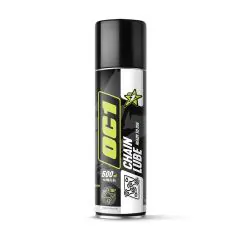
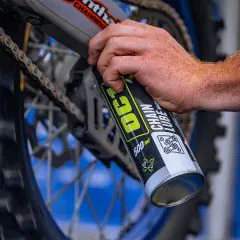
The chain deserves a special mention. A multi-purpose spray works well for cleaning it before lubrication, but as a lubricant it gives only short-lived protection. A dedicated lube such as OC1 Chain Lube adheres better and resists water and mud. The differences between a penetrating product and a chain lube are discussed in more detail in the article on whether a popular penetrating spray is suitable for bicycle chain lubrication. Cables also call for caution - for cables with an internal low-friction liner, some manufacturers advise against lubricating them, so it is worth checking the motorcycle's manual.
The procedure is based on the manufacturer's instructions for OC1 Multifunction Spray. The aerosol is extremely flammable, so it is used at 5–25 °C, in a well-ventilated place, away from flames and sparks, without breathing in the mist.
Heavier dirt, especially dried mud, is removed from the application area. A thorough wash is not necessary, but sand in a joint mixed with lubricant acts like a grinding paste. The engine and exhaust must cool down to ambient temperature.
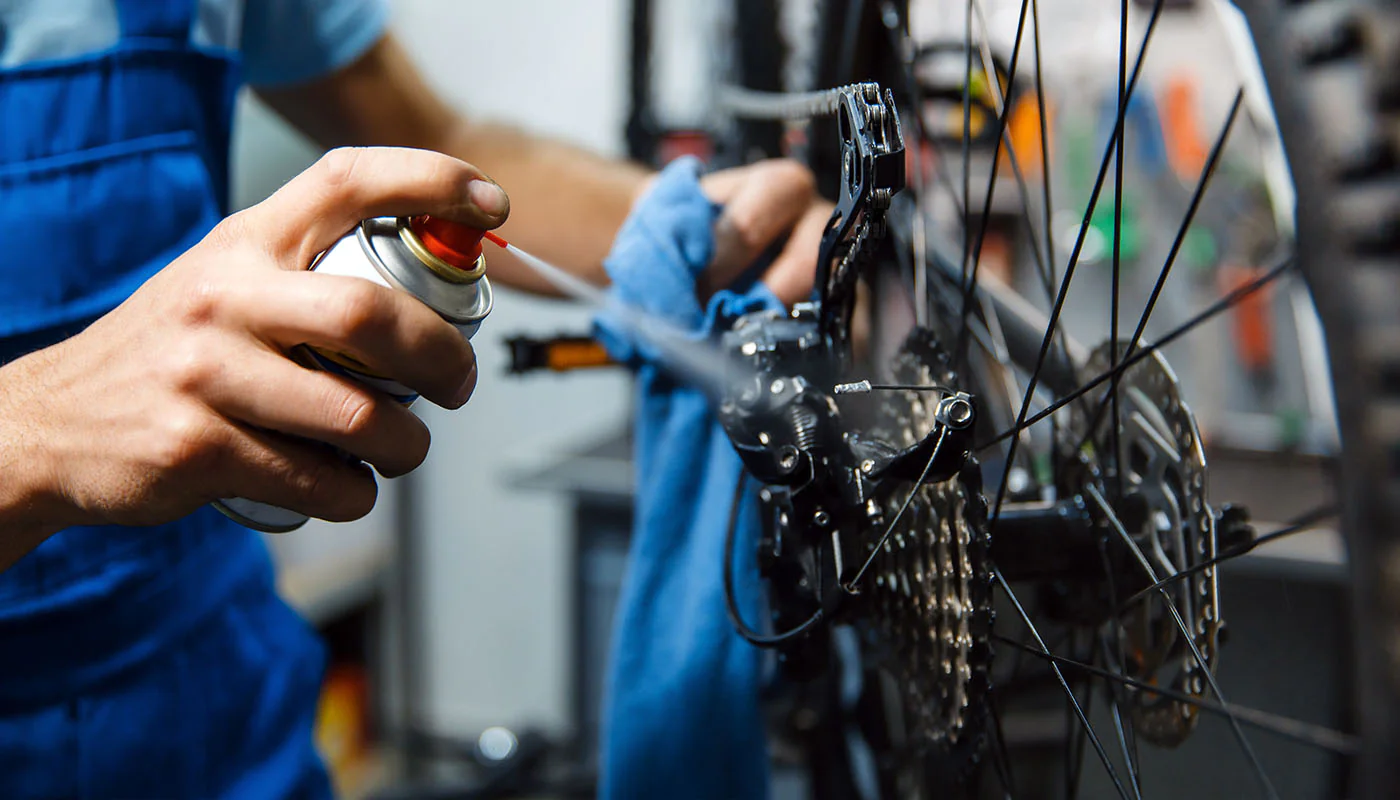
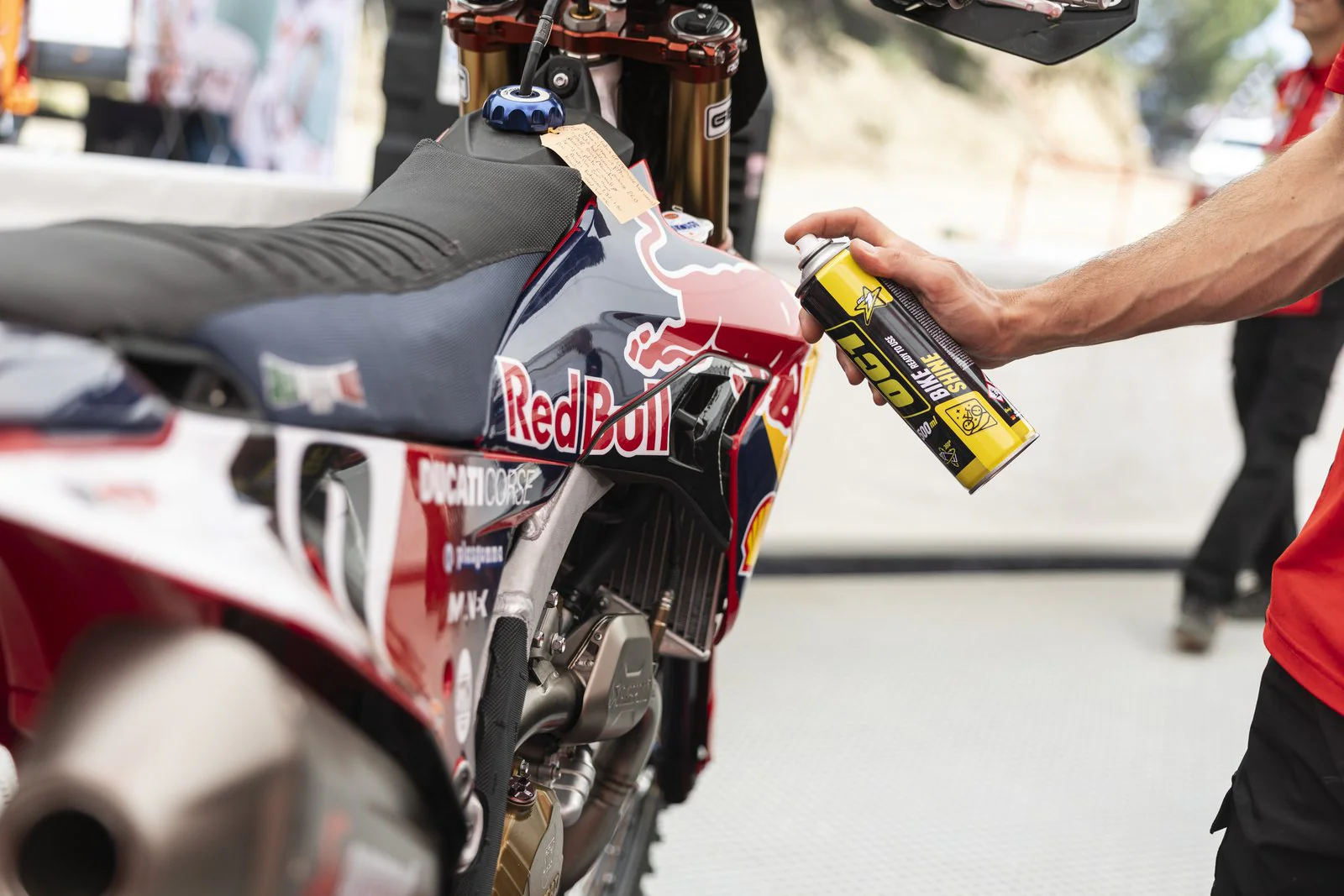
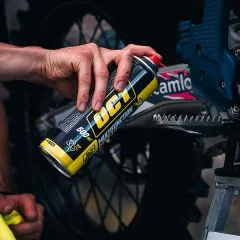
The can should be shaken for a few seconds and the product then applied in a thin layer from a distance of about 15–20 cm. Drenching the part does not improve the result. Near the brakes, it is worth shielding the discs with a piece of cardboard.
For light dirt and lubrication, 30–60 seconds is enough. A seized bolt or heavy corrosion needs 5–10 minutes, and in difficult cases a second application.
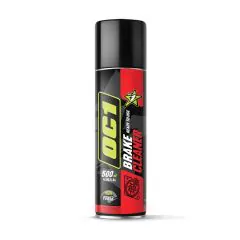
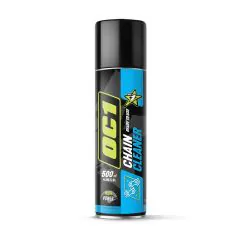
The moving part is worked back and forth several times so that the product gets deep into the mechanism. The excess is wiped off with a microfibre cloth, because a film left behind attracts dust. If the product gets onto a disc or the pads, they must be cleaned straight away with a degreaser, for example OC1 Brake Cleaner, and the motorcycle must not be ridden before the brakes have been checked.
Most problems come from treating the product as an all-purpose lubricant:
A few months standing in an unheated garage is a hard time for metal - temperature changes cause moisture to condense, and rust appears on bolts and springs. Before laying the motorcycle up for the winter, the OC1 manufacturer recommends applying the product to metal surfaces twice, 24 hours apart.
The treatment is done on a clean, dry motorcycle. Paint and plastics are better protected with a separate product, as described in the guide on how to protect a motorcycle after washing. The can also needs the right conditions: the manufacturer recommends storing it at 5–30 °C and warns against exposing it to temperatures above 50 °C, including in hot luggage.
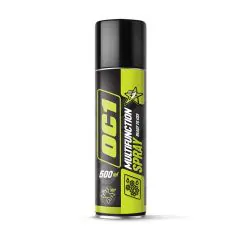
OC1 Multifunction Spray is a 500 ml aerosol made in Germany that lubricates, displaces moisture, leaves a layer that protects against rust and helps free seized bolts. The manufacturer lists use on road, motocross, enduro and speedway motorcycles, quads, scooters and bicycles. One can is enough for around 50–60 spot applications and fits in a backpack or top box, so it also comes in handy on the road.
Below are answers to the most common questions about multi-purpose spray for motorcycles.
Only as a stopgap, for example on the road. A dedicated chain lube adheres better and is water-resistant, while a multi-purpose spray is best used for cleaning the chain before lubrication.
According to the manufacturer, OC1 Multifunction Spray is safe for metal, plastics and rubber and does not discolour plastic fairings. Dedicated products are better for giving plastics a shine, however.
Yes, on motorcycle connectors, contacts and switches, especially after riding in the rain or after washing. The manufacturer does not, however, recommend using the product on consumer electronics.
A multi-purpose spray for motorcycles solves many small problems: it stops hinges and joints squeaking, restores smooth operation to locks and levers, displaces water after washing and rain, and protects metal against rust, including during winter storage. A good result depends on a thin layer, removing the excess and keeping the product away from the brakes, tyres and surfaces that must provide grip.
OC1 Multifunction Spray combines lubrication, protection and penetration in one aerosol, and together with a dedicated chain lube and a brake degreaser it makes up a motorcyclist's basic set of workshop chemicals.