Product added to cart
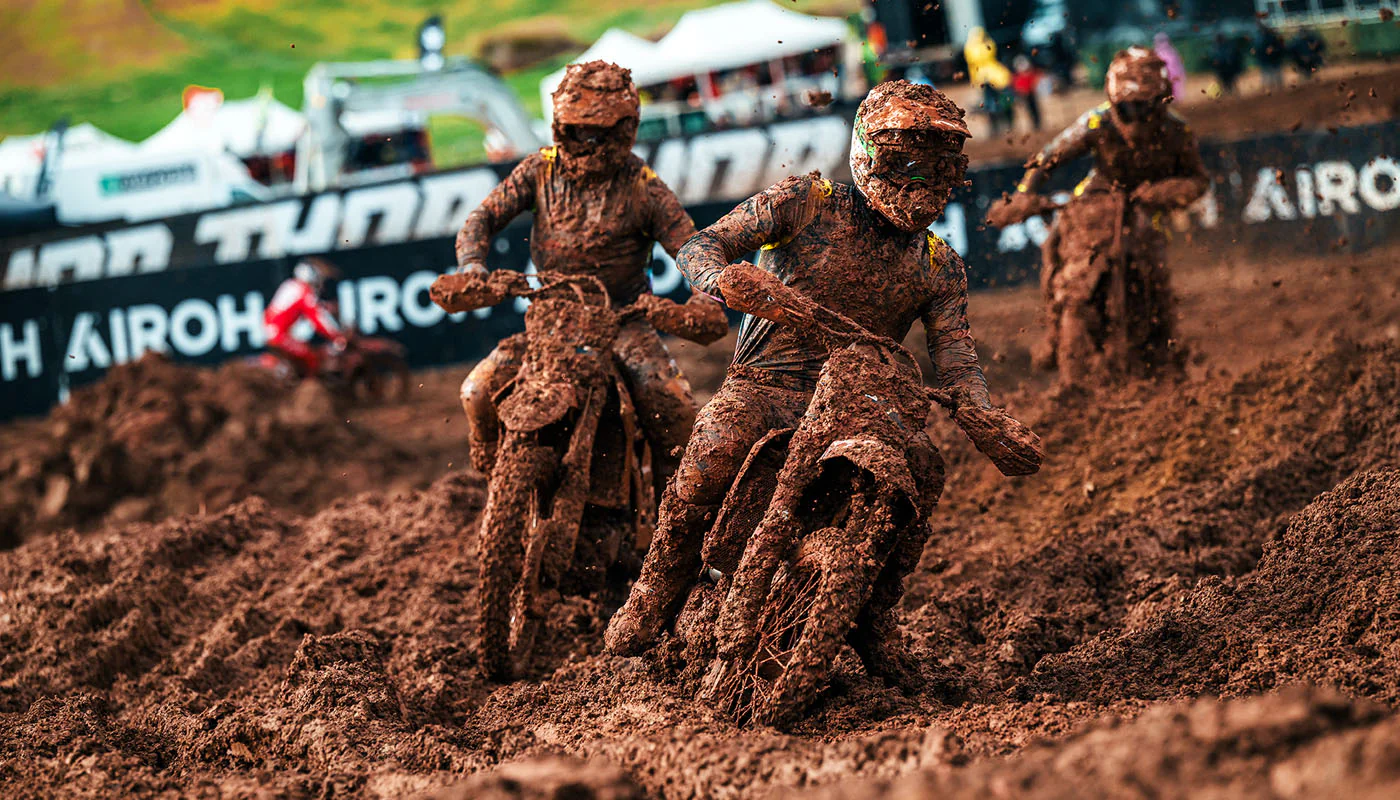
Motocross training in the heat, a full day's ride or an enduro trip usually end the same way: clothing, boots, gloves and protectors are soaked with sweat. After a few rides like that, an unpleasant odour develops in motorcycle gear that does not go away after a single airing and over time spreads to the bag, the wardrobe and the garage.
The source of the smell is not sweat itself, but bacteria that thrive in the warm, damp inside of the gear. An effective solution combines three habits: drying quickly, freshening up regularly and washing when it is really needed.
Fresh sweat is practically odourless. It consists mainly of water and mineral salts and, to a lesser extent, fats, proteins and urea. The characteristic sour smell only develops when bacteria present on the skin and in the fabric break these compounds down into volatile substances.
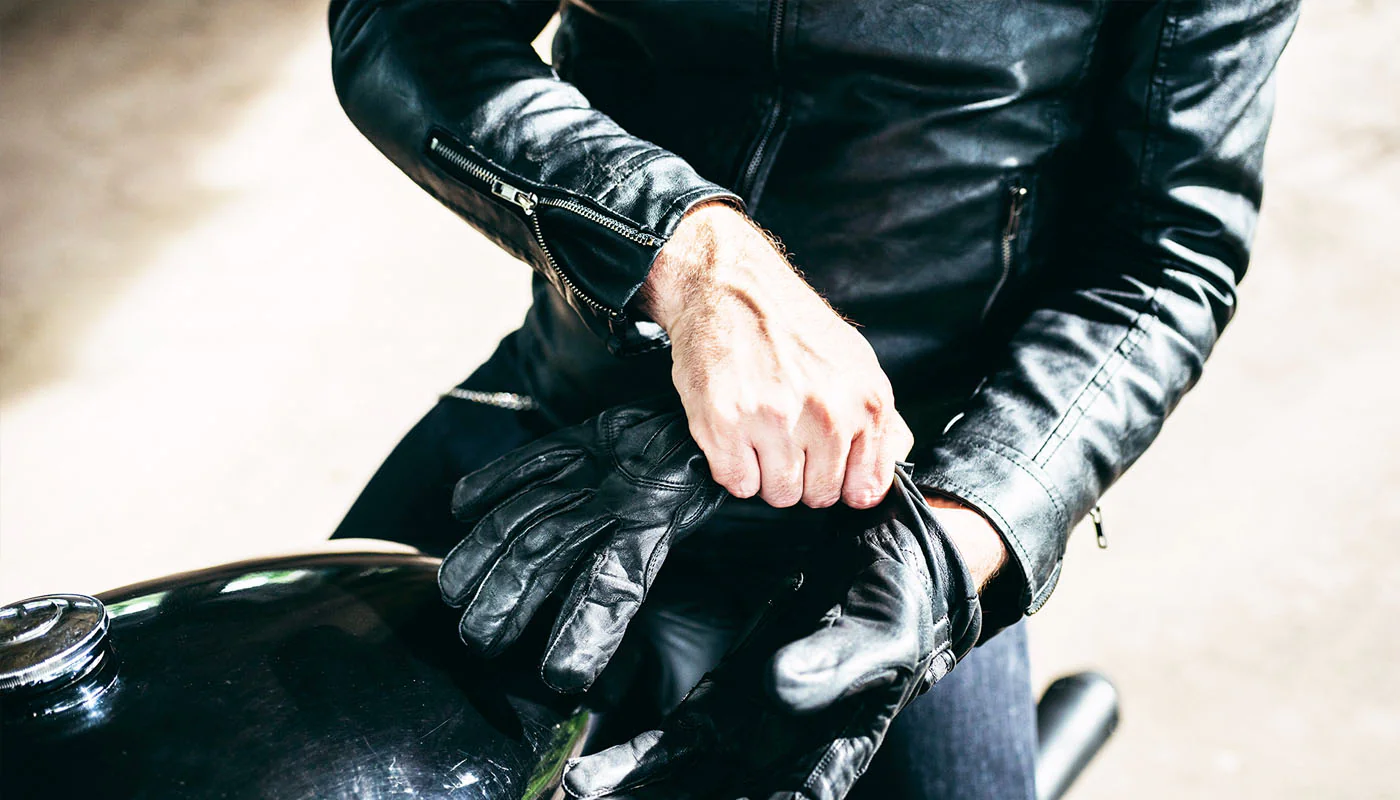
Motorcycle clothing creates favourable conditions for microorganisms. Membranes, closed boots and gloves restrict airflow, while the foam of protectors and liners soaks up sweat like a sponge. When damp gear goes into a bag after a ride, bacteria and fungi have many hours to multiply. The items most at risk are those that sit against the body and are hard to wash: boot insoles, glove interiors, protectors, body armour, kidney belts and helmet liners. The same mechanism affects cyclists, especially cycling gloves and shoes.
The cheapest way to limit odour is to remove moisture quickly. The shorter the time the gear stays wet, the less time bacteria have to break down sweat, so drying should start as soon as you get back. The jacket and trousers are best hung up with the zips undone and the vents open. It is worth taking the insoles out of the boots, and stuffing them with paper speeds up moisture removal, provided the soaked paper is replaced.
Gear should dry at room temperature, in a well-ventilated place. A radiator or a hair dryer speeds up drying, but high temperatures can harden leather, weaken adhesives and damage the membrane or foam. After riding in mud, both the rider's gear and the machine need attention - the latter is covered in the guide on how to care for an enduro motorcycle after extreme conditions.
Freshening up and washing are not interchangeable methods but complementary ones. A freshener neutralises odour between washes, but it does not remove dirt, sweat salts or mud - that kind of dirt needs water and a cleaning product.
| Situation | Freshening up | Washing or cleaning |
|---|---|---|
| Odour after 1–2 rides, no visible dirt | enough | not necessary |
| Mud, dust, greasy stains | not enough | necessary |
| White salt marks on the fabric | not enough | necessary |
| Odour returns a few hours after freshening | as a supplement | necessary |
| End of season, storage | after washing | necessary |
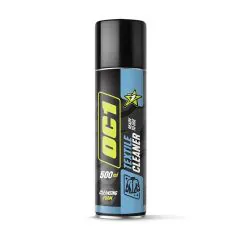
Motorcycle clothing is always washed according to the manufacturer's care label. Local dirt on textile jackets and trousers can be removed without washing, for example with OC1 Textile Cleaner. Leather needs separate care, described in the guide on how to care for motorcycle leather.
A helmet liner soaks up sweat just like gloves, and because it is so close to the face the smell is particularly noticeable. In many helmets the cheek pads and the crown liner can be removed and washed, and freshened up between washes. The rules for removing, washing and drying the liner are covered in the guide on how to care for a motorcycle helmet.
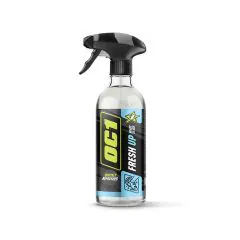
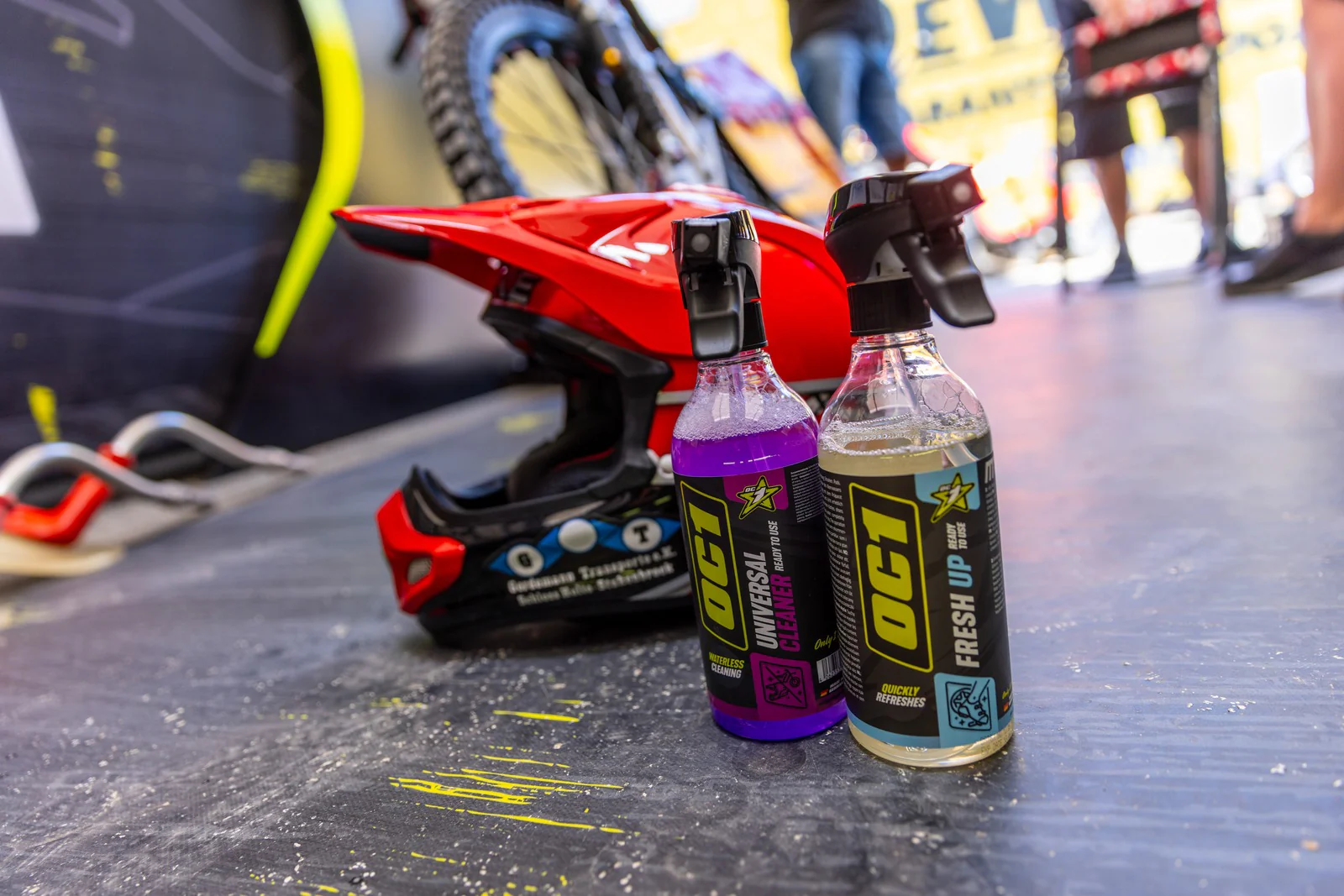
OC1 Fresh Up is designed for textiles, foam and liners, plastics and the metal parts of gear. The manufacturer lists helmets, gloves, footwear, protectors and sportswear - both motorcycle and cycling.
On smooth leather, suede and delicate fabrics the manufacturer recommends a test in an inconspicuous spot first; it is also worth doing one on clothing with a membrane. The product is not applied to hot gear, and the recommended temperature range is 5–25 °C. The freshener is not a disinfectant either - on gear used by several people it neutralises odour, but hygiene requires separate measures.
The procedure takes a few minutes, and the description follows the OC1 Fresh Up manufacturer's instructions.
Mud and dust are removed from the surface with a dry brush or a slightly damp cloth, and the gear should be allowed to cool down after the ride. Badly soaked boots or gloves are pre-dried first.
The bottle is shaken for 3–5 seconds and the product sprayed evenly from a distance of about 15–20 cm. A spray lasting 2–3 seconds is usually enough for one item. The areas that absorb the most sweat need the most attention: glove interiors, boot insoles, protector foam, and the armpits and back of a motocross jersey.
The product does not need to be wiped off or rinsed. Textiles usually dry in anything from 15 minutes to an hour, depending on temperature and humidity. The gear is only put on once it is completely dry, which matters especially for sensitive skin - the fragrance contains an ingredient (hexyl cinnamal) that may cause allergic reactions.
The manufacturer recommends using the product after every training session or ride, or at the first signs of odour. It is easier to neutralise it as you go than after a few weeks, when it has worked its way deep into the foam.
A persistent odour is usually the result of a few recurring habits:
OC1 Fresh Up is a ready-to-use freshener made in Germany, in a 450 ml bottle with a sprayer. It neutralises odours rather than masking them, and its delicate green tea scent is barely noticeable once dry. The product is not a disinfectant and does not replace washing. It needs no rinsing and leaves no stains.
Below are answers to the questions that come up most often when tackling odour in gear.
After every ride, take out the insoles and dry the boots at room temperature, away from the radiator. Then apply a freshener inside, for example OC1 Fresh Up. If the smell still comes back, the insoles are worth washing or replacing.
The manufacturer's instructions decide. Foam protectors are often cleaned by hand in lukewarm water with a mild detergent, and only some models can be machine washed.
No. A freshener neutralises odour between washes, but it does not remove dirt, sweat salts or mud. When dirt is visible or the smell quickly returns, the clothing needs washing according to the care label.
An unpleasant odour in motorcycle gear is the work of bacteria that break down sweat in the warm, damp inside of boots, gloves, protectors and jackets. The basis is quick drying in a well-ventilated place, without high temperatures, and washing when the gear is visibly dirty or the smell returns despite freshening up.
OC1 Fresh Up complements these habits: it neutralises odour after every ride, needs no rinsing and leaves no stains, so motorcyclists' and cyclists' gear stays fresh between washes.